

€ 9,28 Gratis verzending

Uitgelicht
|
|
9,28 |
Naar shop
|

|
9,28 |
Naar shop
|

|
11,50 |
Naar shop
|
| VERGELIJK ALLE AANBIEDERS (3) | ||
 Beschrijving
Vergelijk aanbieders (3)
€ 9,28 Gratis verzending
€ 9,28 Gratis verzending
€ 11,50 € 2,99 verzendkosten Totaal € 14,49
Winkels met andere maten
Beschrijving
(1)
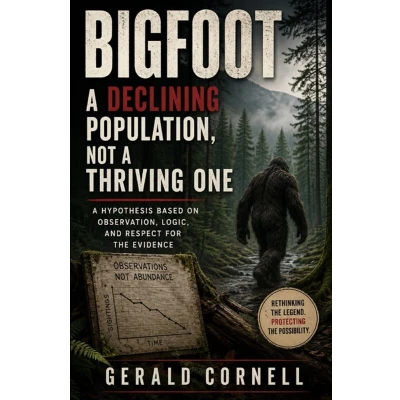
For generations, the mystery of Bigfoot has inspired debate, fascination, and endless speculation. But what if we have been asking the wrong question?In Bigfoot: A Declining Population, author Gerald Cornell explores a provocative new hypothesis: if Bigfoot exists, it may not be a thriving hidden species-it may be a relic population slowly fading into extinction.Drawing on concepts from ecology, evolution, anthropology, conservation biology, and Ice Age history, this thought-provoking book examines the possibility that Bigfoot represents the last survivors of an ancient lineage. Rather than attempting to prove or disprove the creature's existence, Cornell investigates what science would predict if such a species once crossed into North America and survived into modern times.Inside, readers will explore: - The Ice Age world that may have created giant primates - Possible evolutionary origins of Bigfoot - Why sightings cluster in the Pacific Northwest - The challenges of low population density and habitat loss - The mystery of missing bodies and scarce evidence - Population bottlenecks, extinction dynamics, and genetic decline - Whether modern sightings could represent the final generations of an ancient speciesBalanced, thoughtful, and grounded in scientific reasoning, Bigfoot: A Declining Population invites readers to consider one of North America's greatest mysteries from an entirely new perspective.Whether you are a skeptic, believer, researcher, or simply curious about the unknown, this book offers a fascinating journey into the possibility that Bigfoot is not a creature waiting to be discovered-but a species quietly disappearing from history.If Bigfoot exists, the greatest mystery may not be how it has remained hidden.The greatest mystery may be how much time it has left.
 Prijshistorie
 * Prijshistorie bevat geen data van Amazon, Amazon Marketplace.
Prijzen voor het laatst bijgewerkt op:
 Gerelateerde resultaten
 Productspecificaties


