








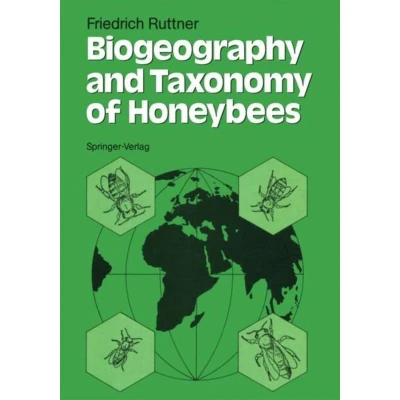
Biogeography and Taxonomy of Honeybees
Uitgelicht

|
142,99 |
Naar shop
|
 Beschrijving
Bol
Variation being exclusively of a quantitative kind at this first step of speciation, tradi tional descriptive methods of systematics proved to be unsatisfactory, and honeybee taxonomy finally ended up in a confusing multitude of inadequately described units. Honeybees are as small as flies or as large as hornets, nesting in nar row cavities of trees and rocks or in the open on large limbs of trees 30 m above ground. They occur in tropical zones and in the forests of the Ural mountains, they survive seven months of winter and even longer periods of drought and heat. Historically, they lived through a extended time of stagnation in the tropics from the mid-Tertiary, but then experienced an explosive evolution during the Pleistocene, re sulting in the conquest of huge new territories and the origin of two dozen subspecies in Apis mellifera. This vast geographic and ecologic diversification of the genus Apis was accompanied by a rich morphological variation, less on the level of species than at the lowest rank, the subspecies level. Variation being exclusively of a quantitative kind at this first step of speciation, tradi tional descriptive methods of systematics proved to be unsatisfactory, and honeybee taxonomy finally ended up in a confusing multitude of inadequately described units. Effective methods of morphometric-sta tistical analysis of honeybee popUlations, centered on limited areas, have been developed during the last decades. Only the numerical characterization of the populations, together with the description of behavior, shows the true geographic variability and will end current generalizations and convenient stereotypes.


Vergelijk aanbieders (1)

 Beschrijving
(1)
Beschrijving
(1)
Variation being exclusively of a quantitative kind at this first step of speciation, tradi tional descriptive methods of systematics proved to be unsatisfactory, and honeybee taxonomy finally ended up in a confusing multitude of inadequately described units. Honeybees are as small as flies or as large as hornets, nesting in nar row cavities of trees and rocks or in the open on large limbs of trees 30 m above ground. They occur in tropical zones and in the forests of the Ural mountains, they survive seven months of winter and even longer periods of drought and heat. Historically, they lived through a extended time of stagnation in the tropics from the mid-Tertiary, but then experienced an explosive evolution during the Pleistocene, re sulting in the conquest of huge new territories and the origin of two dozen subspecies in Apis mellifera. This vast geographic and ecologic diversification of the genus Apis was accompanied by a rich morphological variation, less on the level of species than at the lowest rank, the subspecies level. Variation being exclusively of a quantitative kind at this first step of speciation, tradi tional descriptive methods of systematics proved to be unsatisfactory, and honeybee taxonomy finally ended up in a confusing multitude of inadequately described units. Effective methods of morphometric-sta tistical analysis of honeybee popUlations, centered on limited areas, have been developed during the last decades. Only the numerical characterization of the populations, together with the description of behavior, shows the true geographic variability and will end current generalizations and convenient stereotypes.
 Productspecificaties
| EAN |
|
|---|---|
| Maat |
|
 Prijshistorie
Prijzen voor het laatst bijgewerkt op:
 Gerelateerde resultaten


