


€ 70,99 Gratis verzending

Gesponsorde links
|
|
70,99 |
Naar shop
|

|
74,07 |
Naar shop
|

|
74,07 |
Naar shop
|
| VERGELIJK ALLE AANBIEDERS (3) | ||
 Beschrijving
Vergelijk aanbieders (3)
Gesponsorde links · Sommige shops betalen ons een vergoeding
€ 70,99 Gratis verzending
€ 74,07 Gratis verzending
€ 74,07 Gratis verzending
Winkels met andere maten
Beschrijving
(1)
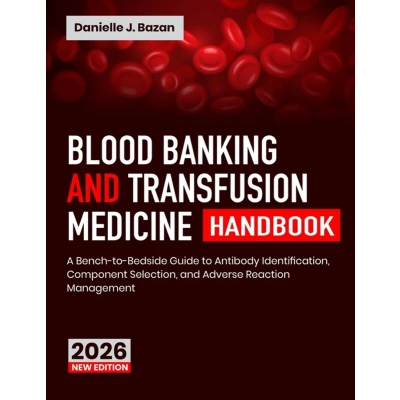
Your antibody screen was negative. Your crossmatch was compatible. Your check cells were valid. And nine days later, your patient is jaundiced with a haemoglobin below where it started. Nobody made a serologic error. So what went wrong - and why doesn't your textbook explain it? Ask yourself: Do you know why a negative cord DAT excludes Rh HDFN - but tells you nothing in ABO? Can you calculate a RhIG dose from a Kleihauer-Betke result and explain why you add an extra vial after rounding? Do you know which crossmatch method is the only one that can detect an antibody to a low-incidence antigen? When a patient on daratumumab produces a pan-reactive panel, do you know why adsorption will not remove it - and why the answer forces you to issue K-negative units? >Understand the mechanism, and you can solve the case you have never seen before. What you get - Part I - Foundations: immunology, genetics, and the physical chemistry that governs every reaction you will ever read- Part II - The Blood Groups: ABO, Rh, Kell, Kidd, Duffy, MNS, Lewis - organised by behaviour, not by history- Part III - Serology: panel interpretation, the Rule of Three with its statistical derivation, adsorption, elution, and the complex antibody problem- Part IV - Practice: pretransfusion testing, donors and components, component therapy, and massive haemorrhage- Part V - Adverse Events & Quality: transfusion reactions, HDFN and the neonate, and the quality systems that make it all work >The next complex antibody, the next unexplained haemoglobin decrement, the next patient who does not fit the table - you will meet them on a night shift, alone, with somebody waiting. This book is written so that when you do, you can reason your way to the answer. Add Modern Blood Banking & Transfusion Practices Handbook to your cart today - and never be caught out by the case that isn't in the table.
 Prijshistorie
* Prijshistorie bevat geen data van Amazon, Amazon Marketplace.
Prijzen voor het laatst bijgewerkt op:
 Gerelateerde resultaten
 Productspecificaties


