


€ 10,00 € 2,99 verzendkosten Totaal € 12,99

Uitgelicht
|
|
10,00 |
Naar shop
|

|
10,12 |
Naar shop
|

|
10,12 |
Naar shop
|
| VERGELIJK ALLE AANBIEDERS (3) | ||
 Beschrijving
Vergelijk aanbieders (3)
€ 10,00 € 2,99 verzendkosten Totaal € 12,99
€ 10,12 Gratis verzending
€ 10,12 Gratis verzending
Winkels met andere maten
Beschrijving
(1)
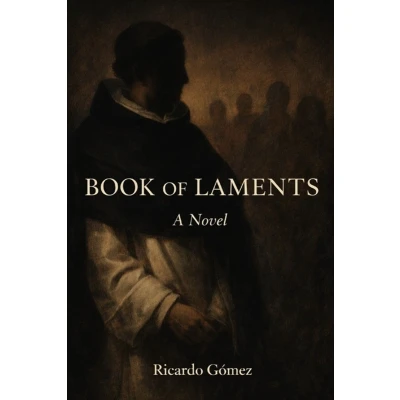
Seville, present day. A gray archival box. A manuscript no one was expecting to find.When Roberto Alvarado, a Mexican-American historian of colonial Latin America, is summoned to the Archivo de Indias, he finds what appears to be an unpublished manuscript in the hand of Bartolomé de las Casas - the sixteenth-century Dominican friar who witnessed the Spanish conquest of the Americas and spent fifty years bearing witness to its destruction. Structured as a series of probanzas, the legal testimonies of his era, the manuscript is Las Casas in his final years: accounting, in precise and merciless prose, for what he saw and failed to stop.But Las Casas did not write alone. Between his testimonies, other voices surface - the voices the archive has no room for: - Xara, a woman from Hispaniola moving through a household that does not see her- Caimán, running from the massacre at Caonao with no destination except away- Rodrigo Cuneo, a translator who serves two masters and belongs to neither- Aj Xpiyakok, a Maya daykeeper recording what must be preserved- Tezozomoc, a Nahua scribe burning his own writing to protect it- Citlali Tozani, doing the work that history will not recordAs Roberto translates the manuscript across a year in Seville, a discovery in a different gray box changes everything he thought he was studying. The history he has spent two decades holding at the appropriate professional distance - through the archival cotton gloves he put on himself - begins, at last, to move.The Book of Laments is a novel about testimony and its limits: about who speaks for whom, what the archive preserves and what it erases, and what it costs a person to discover they have been living inside the very history they have spent their life studying. It is, above all, a novel about the people the record cannot hold.For readers of Yaa Gyasi, Hilary Mantel, Viet Thanh Nguyen, and Eduardo Galeano.
 Prijshistorie
 * Prijshistorie bevat geen data van Amazon, Amazon Marketplace.
Prijzen voor het laatst bijgewerkt op:
 Gerelateerde resultaten
 Productspecificaties


