


€ 32,99 Gratis verzending

Uitgelicht
|
|
32,99 |
Naar shop
|

|
33,99 |
Naar shop
|

|
33,99 |
Naar shop
|
| VERGELIJK ALLE AANBIEDERS (3) | ||
 Beschrijving
Vergelijk aanbieders (3)
€ 32,99 Gratis verzending
€ 33,99 Gratis verzending
€ 33,99 Gratis verzending
Winkels met andere maten
Beschrijving
(1)
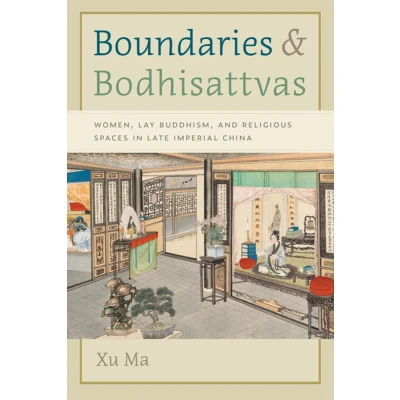
A striking new perspective on women, religious spaces, and literary culture during the Ming and Qing erasFrom the sixteenth to early nineteenth centuries, Neo-Confucian ideology sought to reinforce the seclusion of women within the domestic sphere, while flourishing lay Buddhism increasingly fueled their passion for visiting temples and going on distant pilgrimages. Xu Ma explores this cultural tension to reveal how religious spaces—physical, imagined, and embodied—emerged as a “third social space” that both sustained and subverted the Confucian binaries of inside and outside, public and private.Drawing on an impressive range of sources, from popular fiction and drama to biographical accounts and archaeological evidence, Ma shows how women’s religious engagement was simultaneously celebrated and condemned in literary and cultural imagination. Outdoor temples were sites of controversy, where women were portrayed as both vulnerable to corruption yet also capable of transcendent manipulation. Through domestic altars and household shrines, women redefined marital and gendered dynamics on their own terms. Eventually, even the female body itself became a sacred site of meaning.This richly interdisciplinary study redefines the place of women in Chinese religious and cultural history. By blending gender studies, spatial theory, and literary analysis, Boundaries and Bodhisattvas demonstrates how women’s bodies and hearts reconfigured both Confucian gender paradigms and the broader religious landscape of late imperial China. It is essential reading for anyone interested in the intersections of gender, religion, and cultural narratives.
 Prijshistorie
 * Prijshistorie bevat geen data van Amazon, Amazon Marketplace.
Prijzen voor het laatst bijgewerkt op:
 Gerelateerde resultaten
 Productspecificaties


