
Brain Lesion Localization & Developmental Functions
Uitgelicht

|
45,98 |
Naar shop
|

|
68,99 |
Naar shop
|
| VERGELIJK ALLE AANBIEDERS (2) | ||
 Beschrijving
Bol
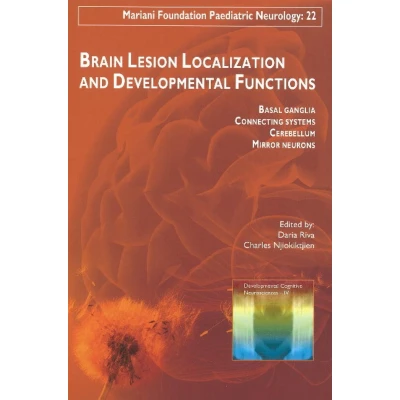
Advances in the neurocognitive sciences, aided by increased imaging power, have extensively confirmed that during early development specific areas of a child's brain are designed to process specific functions -- neurologic, cognitive, linguistic, motoric, and visuospatial, among others -- and that this processing involves globally complex interconnections with other areas distributed throughout the brain: a lesion in a given area interferes with the functioning and coherence of the stem as a whole. This volume discusses the consequences of early brain injury to many parts of the brain, including the basal ganglia, with their related disorders of aphasia, OCD, and AD/HD, as well as white matter and its associated neuro-psychological impairment of intelligence, language, and visuoperception. The corpus callosum and cerebellum are studied as they relate to learning motor sequences and language as well as communication disorders and social behaviour. This book also looks at mirror neurons as they affect the understanding of others' intentions and the development of empathy and gestural and other forms of language. The implications of these findings are examined since they have a critical effect on the rehabilitative and educational efforts that are being designed to mitigate the effects of early brain lesions on the growing child.


 Beschrijving
(2)
Beschrijving
(2)
Advances in the neurocognitive sciences, aided by increased imaging power, have extensively confirmed that during early development specific areas of a child's brain are designed to process specific functions -- neurologic, cognitive, linguistic, motoric, and visuospatial, among others -- and that this processing involves globally complex interconnections with other areas distributed throughout the brain: a lesion in a given area interferes with the functioning and coherence of the stem as a whole. This volume discusses the consequences of early brain injury to many parts of the brain, including the basal ganglia, with their related disorders of aphasia, OCD, and AD/HD, as well as white matter and its associated neuro-psychological impairment of intelligence, language, and visuoperception. The corpus callosum and cerebellum are studied as they relate to learning motor sequences and language as well as communication disorders and social behaviour. This book also looks at mirror neurons as they affect the understanding of others' intentions and the development of empathy and gestural and other forms of language. The implications of these findings are examined since they have a critical effect on the rehabilitative and educational efforts that are being designed to mitigate the effects of early brain lesions on the growing child.
Bol PartnerThe aim of this publication is to demonstrate the effect of the neural networks on cognitive functions and behavioural patterns during the development phase of a child. Taking as a basis the previous publication in this series dedicated to brain lesion localisation and development, this time it is by examining in particular the frontal lobe, limbic system (hippocampus and amygdala) and visuo-cognitive system that this book looks at the close links between the neural networks and the future development of visual, cognitive and functional capacities. The section on the frontal lobe concentrates on anatomy, mirror neurons, memory, executive functions, the neuropsychology of frontal lobe epilepsy and the resolution of social problems which can occur as a result of brain damage. The part on the limbic system looks at neuro-anatomical organisation and the core functions of the hippocampus and amygdala, problems of language, music, emotions or autism. Finally, the section dedicated to the visuo-cognitive system summarises the visual field problems associated with focal lesions, the correlation with neuro-imagery and visual impairment in children born prematurely.
 Productspecificaties
| EAN |
|
|---|---|
| Maat |
|
 Prijshistorie
Prijzen voor het laatst bijgewerkt op:
 Gerelateerde resultaten


