

€ 104,99 Gratis verzending

Uitgelicht
|
|
104,99 |
Naar shop
|

|
104,99 |
Naar shop
|

|
119,00 |
Naar shop
|
| VERGELIJK ALLE AANBIEDERS (3) | ||
 Beschrijving
Vergelijk aanbieders (3)
€ 104,99 Gratis verzending
€ 104,99 Gratis verzending
€ 119,00 Gratis verzending
Winkels met andere maten
Beschrijving
(1)
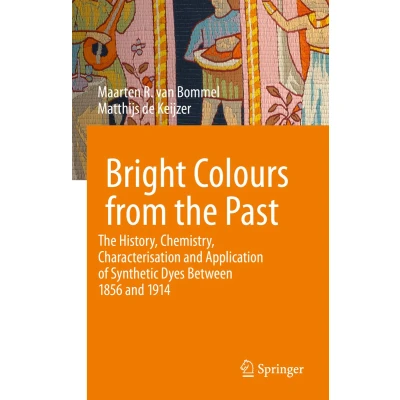
It brings together information about the history of synthetic dyes, including the first attempts, the so-called semi-synthetic dyes, and presenting the most relevant dyes and dye classes, such as nitro dyes, tri-arylmethanes, azo dyes, xanthenes, sulfur dyes, synthetic alizarin and synthetic indigo. The invention of Mauveine by Perkin in 1856, led to a revolution in the world of textile dyeing. In the second half of the 19th century, natural dyes were quickly replaced by newly developed synthetic dyes which resulted in a bright palette of colours. The synthetics dyes were not only cheaper to produce, but also easier to apply on textiles due to new dyeing mechanisms. As a result, production costs decreased tremendously and brilliantly dyed textiles became available to the larger public. The introduction of synthetic dyes had a strong impact in fashion, in addition, these colourant were also used as stains on furniture, as inks and in paints. In this publication, the developments of these vivid colourants will be presented. It will bring together information about the history of synthetic dyes, including the first attempts of the so-called semi-synthetic dyes, presenting the most relevant dyes and dye classes, such as nitro dyes, tri-arylmethanes, azo dyes, xanthenes, sulfur dyes, synthetic alizarin and synthetic indigo. It contains a wealth of information regarding the numerous synonyms, trade names, manufacturers and patents. International trade and competition, which was fierce, will be discussed. The chemistry behind the synthetic dyeing will be explained, including new dyeing technologies developed. The application of dyes and their fastness properties will be presented as well. An overview of analytical techniques used for characterisation will be given. In the publication, many case studies will be presented, expressing the importance of the dyes and the creativity of mankind when applying these colourant. As such, this publication can be seen as a colourful journey to history relevant for conservators, curators, (art) historians, chemists and all who are interested in the history and development of synthetic dyes. The invention of Mauveine by Perkin in 1856 led to a revolution in the world of textile dyeing. In the second half of the 19th century, natural dyes were quickly replaced by newly developed synthetic dyes which resulted in a bright palette of colours. The synthetic dyes were not only cheaper to produce, but also easier to apply on textiles due to new dyeing mechanisms. As a result, production costs decreased tremendously and brilliantly dyed textiles became available to the larger public. The introduction of synthetic dyes had a strong impact in fashion; in addition, these colourants were also used as stains on furniture, as inks and in paints. In this publication, the development of these vivid colourants is presented. It brings together information about the history of synthetic dyes, including the first attempts, the so-called semi-synthetic dyes, and presenting the most relevant dyes and dye classes, such as nitro dyes, tri-arylmethanes, azo dyes, xanthenes, sulfur dyes, synthetic alizarin and synthetic indigo. It contains a wealth of information regarding the numerous synonyms, trade names, manufacturers and patents. International trade and competition, which was fierce, are discussed. The chemistry behind the synthetic dyeing is explained, including new dyeing technologies developed. The application of dyes and their fastness properties are also presented. An overview of analytical techniques used for characterisation is given. Many case studies are included, expressing the importance of the dyes and the creativity of mankind when applying these colourants. As such, this publication can be seen as a colourful journey through history, relevant for conservators, curators, historians, chemists and all who are interested in the history and development of synthetic dyes.
 Prijshistorie
 * Prijshistorie bevat geen data van Amazon, Amazon Marketplace.
Prijzen voor het laatst bijgewerkt op:
 Gerelateerde resultaten
 Productspecificaties


