
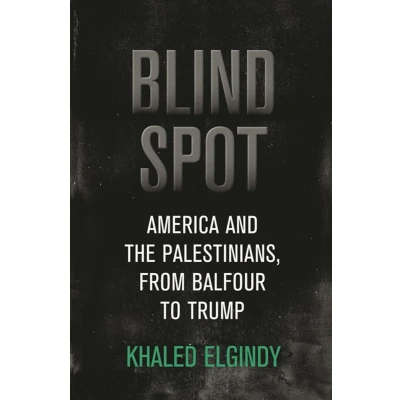
Brookings / Ash Center Series, "Innovative Governance in the 21st Century" Blind Spot
Uitgelicht

|
32,40 |
Naar shop
|
| VERGELIJK ALLE AANBIEDERS (1) | ||
 Beschrijving
Bol
Looks at the interplay between the U.S.-led peace process and internal Palestinian politics—namely, how a badly flawed peace process helped to weaken Palestinian leaders and institutions and how an increasingly dysfunctional Palestinian leadership, in turn, hindered prospects for a diplomatic resolution. The United States has invested billions of dollars and countless diplomatic hours in the pursuit of Israeli-Palestinian peace and a two-state solution. Yet American attempts to broker an end to the conflict have repeatedly come up short. In Blind Spot, Khaled Elgindy shows that two irreducible factors stand in the way: Israeli power and Palestinian politics. American peacemaking efforts have been hobbled by Washington's assumption that a credible peace settlement could be achieved without addressing either Israel's vast superiority in power or internal Palestinian politics. Elgindy finds that while Israelis and Palestinians have each played a role in perpetuating their conflict, Washington's distinctive “blind spot” to Palestinian politics and Israeli power has prevented it from serving as an effective peace broker. Shaped by the pressures of American domestic politics and the special relationship with Israel, the blind spot also has deep historical roots, dating back to the 1917 Balfour Declaration and the British Mandate over Palestine. The size and intensity of the blind spot have varied over the years and from one administration to another, but it remains always present. Elgindy argues that unless and until U.S. policymakers are prepared to act in ways that constrain Israeli power and acknowledge Palestinian politics, American peacemaking stands little chance of success. A critical examination of the history of US-Palestinian relationsThe United States has invested billions of dollars and countless diplomatic hours in the pursuit of Israeli-Palestinian peace and a two-state solution. Yet American attempts to broker an end to the conflict have repeatedly come up short. At the center of these failures lay two critical factors: Israeli power and Palestinian politics.While both Israelis and Palestinians undoubtedly share much of the blame, one also cannot escape the role of the United States, as the sole mediator in the process, in these repeated failures. American peacemaking efforts ultimately ran aground as a result of Washington's unwillingness to confront Israel's ever-deepening occupation or to come to grips with the realities of internal Palestinian politics. In particular, the book looks at the interplay between the U.S.-led peace process and internal Palestinian politicsnamely, how a badly flawed peace process helped to weaken Palestinian leaders and institutions and how an increasingly dysfunctional Palestinian leadership, in turn, hindered prospects for a diplomatic resolution. Thus, while the peace process was not necessarily doomed to fail, Washington's management of the process, with its built-in blind spot to Israeli power and Palestinian politics, made failure far more likely than a negotiated breakthrough.Shaped by the pressures of American domestic politics and the special relationship with Israel, Washington's distinctive blind spot to Israeli power and Palestinian politics has deep historical roots, dating back to the 1917 Balfour Declaration and the British Mandate. The size of the blind spot has varied over the years and from one administration to another, but it is always present.


Vergelijk aanbieders (1)

 Beschrijving
(1)
Beschrijving
(1)
Looks at the interplay between the U.S.-led peace process and internal Palestinian politics—namely, how a badly flawed peace process helped to weaken Palestinian leaders and institutions and how an increasingly dysfunctional Palestinian leadership, in turn, hindered prospects for a diplomatic resolution. The United States has invested billions of dollars and countless diplomatic hours in the pursuit of Israeli-Palestinian peace and a two-state solution. Yet American attempts to broker an end to the conflict have repeatedly come up short. In Blind Spot, Khaled Elgindy shows that two irreducible factors stand in the way: Israeli power and Palestinian politics. American peacemaking efforts have been hobbled by Washington's assumption that a credible peace settlement could be achieved without addressing either Israel's vast superiority in power or internal Palestinian politics. Elgindy finds that while Israelis and Palestinians have each played a role in perpetuating their conflict, Washington's distinctive “blind spot” to Palestinian politics and Israeli power has prevented it from serving as an effective peace broker. Shaped by the pressures of American domestic politics and the special relationship with Israel, the blind spot also has deep historical roots, dating back to the 1917 Balfour Declaration and the British Mandate over Palestine. The size and intensity of the blind spot have varied over the years and from one administration to another, but it remains always present. Elgindy argues that unless and until U.S. policymakers are prepared to act in ways that constrain Israeli power and acknowledge Palestinian politics, American peacemaking stands little chance of success. A critical examination of the history of US-Palestinian relationsThe United States has invested billions of dollars and countless diplomatic hours in the pursuit of Israeli-Palestinian peace and a two-state solution. Yet American attempts to broker an end to the conflict have repeatedly come up short. At the center of these failures lay two critical factors: Israeli power and Palestinian politics.While both Israelis and Palestinians undoubtedly share much of the blame, one also cannot escape the role of the United States, as the sole mediator in the process, in these repeated failures. American peacemaking efforts ultimately ran aground as a result of Washington's unwillingness to confront Israel's ever-deepening occupation or to come to grips with the realities of internal Palestinian politics. In particular, the book looks at the interplay between the U.S.-led peace process and internal Palestinian politicsnamely, how a badly flawed peace process helped to weaken Palestinian leaders and institutions and how an increasingly dysfunctional Palestinian leadership, in turn, hindered prospects for a diplomatic resolution. Thus, while the peace process was not necessarily doomed to fail, Washington's management of the process, with its built-in blind spot to Israeli power and Palestinian politics, made failure far more likely than a negotiated breakthrough.Shaped by the pressures of American domestic politics and the special relationship with Israel, Washington's distinctive blind spot to Israeli power and Palestinian politics has deep historical roots, dating back to the 1917 Balfour Declaration and the British Mandate. The size of the blind spot has varied over the years and from one administration to another, but it is always present.
 Productspecificaties
| EAN |
|
|---|---|
| Maat |
|
 Prijshistorie
Prijzen voor het laatst bijgewerkt op:
 Gerelateerde resultaten


