

€ 18,39 Gratis verzending

Gesponsorde links
|
|
18,39 |
Naar shop
|

|
18,39 |
Naar shop
|

|
21,00 |
Naar shop
|
| VERGELIJK ALLE AANBIEDERS (3) | ||
 Beschrijving
Vergelijk aanbieders (3)
Gesponsorde links · Sommige shops betalen ons een vergoeding
€ 18,39 Gratis verzending
€ 18,39 Gratis verzending
€ 21,00 € 2,99 verzendkosten Totaal € 23,99
Winkels met andere maten
Beschrijving
(1)
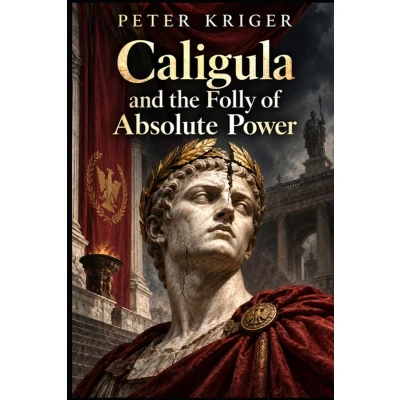
Everyone knows what Caligula did. He made his horse a consul. He declared war on the sea and ordered his soldiers to collect seashells as spoils. He announced that he was a god, slept with his sisters, and wished the Roman people had a single neck so he could cut it. Almost none of that is evidence. It is testimony - and every surviving witness was written by, or written for, the people who killed him and then needed the killing to look necessary. The one historian who might have been coldest about it, Tacitus, wrote four books on the reign, and all four are lost. What survives is a verdict that outlived its defendant by two thousand years, and we have been reading it as a police report. This book does something simpler and stranger than defending Caligula, which would be foolish, or condemning him, which has been done. It asks what the record can actually carry. Five tests are set out early - is there a named witness, was the story told before or after the daggers, does ordinary self-interest explain it without invoking madness, did the teller benefit, is there anything material - and then the famous anecdotes are run through them one at a time. Some survive. Most do not survive intact. The horse, it turns out, was never made consul by anybody; a hostile writer eighty years later reported that the emperor had intended to, and history has been repeating the intention as an act ever since. And underneath the anecdotes sits the real argument, which has nothing to do with one young man's character. Absolute power does not rot a personality. It deletes a channel. When contradiction costs the contradictor everything and the contradicted nothing, error stops being reported, and a perfectly rational mind - reasoning correctly from whatever reaches it - begins producing outputs indistinguishable from madness. That is the folly named in the subtitle. It is not his folly. It is the folly of an office that had no way of finding out it was wrong. The Romans built such an office, wrote it into law without ever admitting they had built it, and then acted astonished when it produced what it was designed to produce. We have not stopped building them. Four years, one reign, a mountain of gossip and a handful of stones. Here is what can be known, what cannot, and why the difference matters more than the scandal. Keywords Caligula; Gaius Caesar Germanicus; Roman emperors; Julio-Claudian dynasty; ancient Rome history; Roman Empire; mad emperor; Suetonius; Cassius Dio; Philo of Alexandria; Josephus; absolute power; tyranny; historiography; source criticism; Incitatus; Roman Senate; Principate; Augustus; Claudius; assassination; political psychology; accountability; institutional failure; popular history; ancient history for general readers
 Prijshistorie
* Prijshistorie bevat geen data van Amazon, Amazon Marketplace.
Prijzen voor het laatst bijgewerkt op:
 Gerelateerde resultaten
 Productspecificaties


