


€ 16,00 € 2,99 verzendkosten Totaal € 18,99

Gesponsorde links
|
|
16,00 |
Naar shop
|

|
16,25 |
Naar shop
|

|
16,25 |
Naar shop
|
| VERGELIJK ALLE AANBIEDERS (3) | ||
 Beschrijving
Vergelijk aanbieders (3)
Gesponsorde links · Sommige shops betalen ons een vergoeding
€ 16,00 € 2,99 verzendkosten Totaal € 18,99
€ 16,25 Gratis verzending
€ 16,25 Gratis verzending
Winkels met andere maten
Beschrijving
(1)
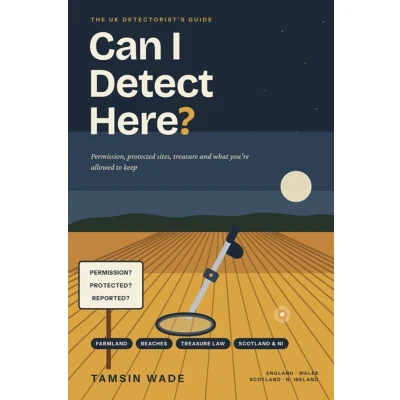
There is no right to detect. Every field, park, beach and foreshore has an owner.You have a metal detector, a free Saturday and a field in view. Then the questions start. Am I allowed to detect here? Who can say yes? Is this beach free for anyone? Is that bump a scheduled monument? I've found something: what now, and who gets to keep it? This cheerful, exact guide answers them, with every rule checked at the official source.- Permission. Why you need the landowner and the tenant, who cannot say yes, how to ask, and the finds agreement that heads off every argument.- Where you are standing. Farmland and farm schemes, footpaths and the right to roam (which does not cover anyone carrying a detector), council parks and byelaws, SSSIs, military crash sites, and the National Trust, which does not allow detecting on its land, beaches included.- Scheduled monuments. The offences in England, Wales (new law since November 2024), Scotland and Northern Ireland, the narrow defences, and how to check the official registers.- Treasure. What counts, the two coin and ten coin rules, dispersed hoards, the 2023 significance class for metal objects over 200 years old, reporting within 14 days, inquests, museums and rewards, and the twelve ways a reward can be cut.- The beach and the Thames. Crown Estate foreshore terms, items of value and equal shares, wreck, and the Port of London Authority permit.- Scotland and Northern Ireland. Why Scotland wants every archaeological find reported, and why Northern Ireland is stricter still.- Staying safe. Human remains, ordnance, tides, findspots and caring for finds.With twenty-four worked outings, a quiz, a ten-minute plan, worksheets, FAQs, a glossary and a finds log.England, Wales, Scotland and Northern Ireland. Nothing in this book is sold.
 Prijshistorie
* Prijshistorie bevat geen data van Amazon, Amazon Marketplace.
Prijzen voor het laatst bijgewerkt op:
 Gerelateerde resultaten
 Productspecificaties


