


€ 20,00 € 2,99 verzendkosten Totaal € 22,99

Uitgelicht
|
|
20,00 |
Naar shop
|

|
87,99 |
Naar shop
|
| VERGELIJK ALLE AANBIEDERS (2) | ||
 Beschrijving
Vergelijk aanbieders (2)
€ 20,00 € 2,99 verzendkosten Totaal € 22,99
€ 87,99 Gratis verzending
Winkels met andere maten
Beschrijving
(1)
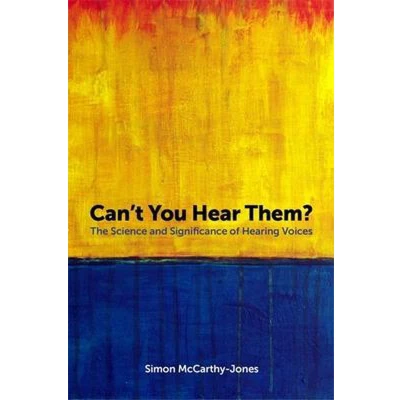
What's wrong with you?' People who hear voices will often hear this alienating question, and are treated ineffectively with anti-psychotic drugs. Recounting the stories of voice-hearers, this book suggests that we should instead ask 'What happened to you?, and offers an alternative approach to auditory hallucinations. The experience of 'hearing voices' has been attributed to the divine and the demonic, to a broken brain and faulty genes, and to an ominous sign of mental illness. Yet there is an alternative account - generated by people who hear voices themselves. This book considers neuroscience, genetics, religion, history, politics, responses to trauma, and not least the first-hand experiences of many voice hearers. Challenging established and seemingly contradictory interpretations of this phenomenon, the author argues that when we focus on evidence rather than ideology, we must allow for multiple causes and meanings of this experience. The experience of 'hearing voices', once associated with lofty prophetic communications, has fallen low. Today, the experience is typically portrayed as an unambiguous harbinger of madness caused by a broken brain, an unbalanced mind, biology gone wild. Yet an alternative account, forged predominantly by people who hear voices themselves, argues that hearing voices is an understandable response to traumatic life-events. There is an urgent need to overcome the tensions between these two ways of understanding 'voice hearing'.Simon McCarthy-Jones considers neuroscience, genetics, religion, history, politics and not least the experiences of many voice hearers themselves. This enables him to challenge established and seemingly contradictory understandings and to create a joined-up explanation of voice hearing that is based on evidence rather than ideology.
 Productspecificaties
| EAN |
|
|---|---|
| Maat |
|
 Prijshistorie
Prijzen voor het laatst bijgewerkt op:
 Gerelateerde resultaten


