
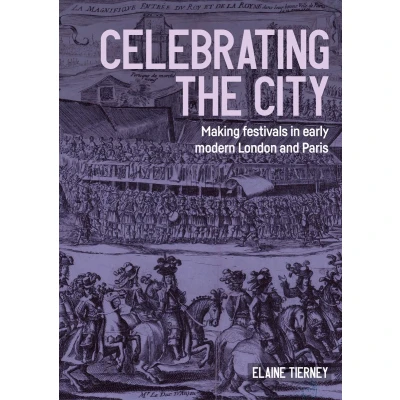
Celebrating the City: Making Festivals in Early Modern London and Paris
Uitgelicht

|
89,33 |
Naar shop
|

|
89,33 |
Naar shop
|

|
99,99 |
Naar shop
|
| VERGELIJK ALLE AANBIEDERS (3) | ||
 Beschrijving
Bol
This book uses a wide range of textual, visual and material evidence to offer the first comparative, interdisciplinary study of festivals in London and Paris. Its unique methodology, combining the tools of design history and the concerns of political history, sheds new light on how political publics were formed in early modern European cities. Celebrating the city looks behind the scenes of early modern celebrations. This timely and original book uses the widest range of textual, visual and material evidence to explore the full gamut of celebratory activities – from splendid coronations to hastily constructed bonfires. In doing so, it offers the first comparative, interdisciplinary study of festivals in London and Paris. At stake throughout is how seventeenth- and eighteenth-century Londoners and Parisians understood the one-off, annual and seasonal events that shaped their lives. By mining evidence of the active processes by which events were made, the book reveals the central importance of designing, making and organising to how and why festivals were meaningful. Ultimately, it argues that the politics of urban festivals cannot be understood without incorporating their material world into our analysis. The book’s unique methodology, combining the tools of design history and the concerns of political history, sheds new light on how political publics were formed in early modern European cities. In showing how cities made festivals – and festivals made cities – this wide-ranging study makes a significant contribution to histories of festivals, political culture and urban life. Celebrating the City takes readers behind the scenes of early modern urban festivities. Ranging from magnificent coronations to modest courtyard bonfires, it offers the first comparative, interdisciplinary study of festivals in London and Paris. Departing from existing scholarship, it draws on an exceptionally broad array of textual, visual and material sources to show that designing, making and organising were central to how festivals acquired meaning. By foregrounding the processes through which events were created, the book argues that urban festival politics cannot be understood without attention to their material worlds. Its innovative methodology—combining design history with political history—sheds new light on the formation of political publics in early modern European cities. Demonstrating how cities made festivals, and festivals helped make cities, this study significantly advances histories of festivals, political culture and urban life.


 Beschrijving
(1)
Beschrijving
(1)
This book uses a wide range of textual, visual and material evidence to offer the first comparative, interdisciplinary study of festivals in London and Paris. Its unique methodology, combining the tools of design history and the concerns of political history, sheds new light on how political publics were formed in early modern European cities. Celebrating the city looks behind the scenes of early modern celebrations. This timely and original book uses the widest range of textual, visual and material evidence to explore the full gamut of celebratory activities – from splendid coronations to hastily constructed bonfires. In doing so, it offers the first comparative, interdisciplinary study of festivals in London and Paris. At stake throughout is how seventeenth- and eighteenth-century Londoners and Parisians understood the one-off, annual and seasonal events that shaped their lives. By mining evidence of the active processes by which events were made, the book reveals the central importance of designing, making and organising to how and why festivals were meaningful. Ultimately, it argues that the politics of urban festivals cannot be understood without incorporating their material world into our analysis. The book’s unique methodology, combining the tools of design history and the concerns of political history, sheds new light on how political publics were formed in early modern European cities. In showing how cities made festivals – and festivals made cities – this wide-ranging study makes a significant contribution to histories of festivals, political culture and urban life. Celebrating the City takes readers behind the scenes of early modern urban festivities. Ranging from magnificent coronations to modest courtyard bonfires, it offers the first comparative, interdisciplinary study of festivals in London and Paris. Departing from existing scholarship, it draws on an exceptionally broad array of textual, visual and material sources to show that designing, making and organising were central to how festivals acquired meaning. By foregrounding the processes through which events were created, the book argues that urban festival politics cannot be understood without attention to their material worlds. Its innovative methodology—combining design history with political history—sheds new light on the formation of political publics in early modern European cities. Demonstrating how cities made festivals, and festivals helped make cities, this study significantly advances histories of festivals, political culture and urban life.
 Productspecificaties
 Prijshistorie
* Prijshistorie bevat geen data van Amazon, Amazon Marketplace.
Prijzen voor het laatst bijgewerkt op:
 Gerelateerde resultaten


