

€ 10,11 Gratis verzending

Gesponsorde links
|
|
10,11 |
Naar shop
|

|
10,11 |
Naar shop
|

|
11,50 |
Naar shop
|
| VERGELIJK ALLE AANBIEDERS (3) | ||
 Beschrijving
Vergelijk aanbieders (3)
Gesponsorde links · Sommige shops betalen ons een vergoeding
€ 10,11 Gratis verzending
€ 10,11 Gratis verzending
€ 11,50 € 2,99 verzendkosten Totaal € 14,49
Winkels met andere maten
Beschrijving
(1)
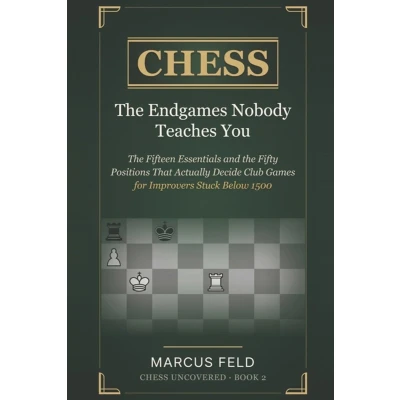
You reach a winning endgame and only draw it. You reach a drawn one and lose. Those half-points are quietly costing you a rating category.The fix is not more theory. It is a small set of concrete methods with definite answers - and the club players across from you have not learned them either. When you know how to build a bridge in a rook ending and your opponent does not, you win a point that was not on the table a month ago.Inside: - The endgame mindset: do not hurry, the king is a fighting piece, calculate to a result, know which result you are playing for.- King and pawn cold: the opposition, key squares, the square of the pawn, triangulation, the outside passed pawn.- Rook endings - the most common ending in club chess: Lucena and Philidor, why an active rook is worth a pawn, and which endings are drawn no matter what.- The wrong-bishop rook-pawn draw. Opposite-coloured bishops, and the three ways they still win. Knight fortresses.- The basic mates - cleanly, fast, and without ever stalemating. Queen versus pawn, queen versus rook.- A sixty-day drilling schedule and thirty positions to know cold.Every position was checked for legality and every line verified against a chess engine, most of them against an endgame tablebase. Plain English, a diagram on nearly every page, written for self-taught players rated roughly 800 to 1500 who are tired of being stuck.Chess Uncovered, Book 2. Reads on its own; pairs with Book 1, The Skills Nobody Teaches You.
 Prijshistorie
* Prijshistorie bevat geen data van Amazon, Amazon Marketplace.
Prijzen voor het laatst bijgewerkt op:
 Gerelateerde resultaten
 Productspecificaties


