
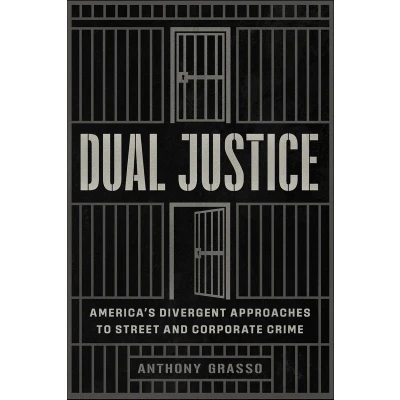
Chicago Series in Law and Society Dual Justice
Uitgelicht

|
12,96 |
Naar shop
|
| VERGELIJK ALLE AANBIEDERS (1) | ||
 Beschrijving
Bol
A far-reaching examination of how America came to treat street and corporate crime so differently. While America incarcerates its most marginalized citizens at an unparalleled rate, the nation has never developed the capacity to consistently prosecute corporate wrongdoing. Dual Justice unearths the intertwined histories of these two phenomena and reveals that they constitute more than just modern hypocrisy. By examining the carceral and regulatory states' evolutions from 1870 through today, Anthony Grasso shows that America's divergent approaches to street and corporate crime share common, self-reinforcing origins. During the Progressive Era, scholars and lawmakers championed naturalized theories of human difference to justify instituting punitive measures for poor offenders and regulatory controls for corporate lawbreakers. These ideas laid the foundation for dual justice systems: criminal justice institutions harshly governing street crime and regulatory institutions governing corporate misconduct. Since then, criminal justice and regulatory institutions have developed in tandem to reinforce politically constructed understandings about who counts as a criminal. Grasso analyzes the intellectual history, policy debates, and state and federal institutional reforms that consolidated these ideas, along with their racial and class biases, into America's legal system.


Vergelijk aanbieders (1)

 Beschrijving
(1)
Beschrijving
(1)
A far-reaching examination of how America came to treat street and corporate crime so differently. While America incarcerates its most marginalized citizens at an unparalleled rate, the nation has never developed the capacity to consistently prosecute corporate wrongdoing. Dual Justice unearths the intertwined histories of these two phenomena and reveals that they constitute more than just modern hypocrisy. By examining the carceral and regulatory states' evolutions from 1870 through today, Anthony Grasso shows that America's divergent approaches to street and corporate crime share common, self-reinforcing origins. During the Progressive Era, scholars and lawmakers championed naturalized theories of human difference to justify instituting punitive measures for poor offenders and regulatory controls for corporate lawbreakers. These ideas laid the foundation for dual justice systems: criminal justice institutions harshly governing street crime and regulatory institutions governing corporate misconduct. Since then, criminal justice and regulatory institutions have developed in tandem to reinforce politically constructed understandings about who counts as a criminal. Grasso analyzes the intellectual history, policy debates, and state and federal institutional reforms that consolidated these ideas, along with their racial and class biases, into America's legal system.
 Productspecificaties
| EAN |
|
|---|---|
| Maat |
|
 Prijshistorie
Prijzen voor het laatst bijgewerkt op:
 Gerelateerde resultaten


