

€ 23,53 Gratis verzending

Uitgelicht
|
|
23,53 |
Naar shop
|

|
24,00 |
Naar shop
|
| VERGELIJK ALLE AANBIEDERS (2) | ||
 Beschrijving
Vergelijk aanbieders (2)
€ 23,53 Gratis verzending
€ 24,00 € 2,99 verzendkosten Totaal € 26,99
Winkels met andere maten
Beschrijving
(1)
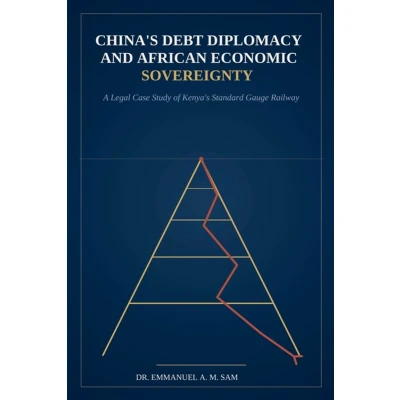
They didn't lose their railway. They signed away the right to say no. In 2014, Kenya broke ground on the largest infrastructure project since its independence: a $3.6 billion railway from the port of Mombasa to Nairobi, financed almost entirely by China. It was sold as the future. What almost no one read - not the press, not the public, not even most of the officials who defended it - was the contract that made it possible. This is the first book to read that contract line by line. What it found should alarm every citizen of every borrowing nation. Buried in the fine print of Kenya's loan agreement with the Export-Import Bank of China are four sentences that quietly rewrote the balance of power between a country and its lender: - A waiver of sovereign immunity that placed national assets - including the Port of Mombasa itself- within reach of a foreign creditor.- An arbitration clause that removed every dispute from Kenya's own courts and handed them to a commission in China.- A confidentiality clause that made it a breach of contract for Kenya's government to tell its own people what they owed.- And take-or-pay and escrow terms that reordered a nation's finances around one creditor's repayment, before a single citizen was served.For years, the world has argued about whether China's lending is a debt trap. That argument was never going to be settled by slogans or statistics. It can only be settled by the documents - and the documents are devastating. Written by an African legal scholar and grounded in Kenya's Constitution, its procurement laws, and the rulings of its Court of Appeal, this is not a polemic nor a journalist's tour of stalled trains. It is a forensic legal autopsy of how economic sovereignty is lost, not to invasion, but to signature. And it proves that Kenya is not an exception but a blueprint, tracing the same clauses and consequences across Zambia, Djibouti, Uganda, Ethiopia, and Sierra Leone. It is also honest enough to argue against itself. It takes seriously the case that China gave Africa an escape from the brutal conditions imposed by the IMF and World Bank, and that borrowing from Beijing was an act of sovereignty, not surrender. Then it shows why that defence collapses at the one place that matters: the terms. A nation can choose freely and still be bound completely. By the last page, you will never read the phrase "debt-trap diplomacy" the same way again. You will stop asking whether there is a trap, and start asking the only question that was ever going to matter: What did they sign, and what did it cost? Essential reading for anyone who wants to understand debt, power, and the future of the world's poorest nations, before the next contract is signed.
 Prijshistorie
 * Prijshistorie bevat geen data van Amazon.
Prijzen voor het laatst bijgewerkt op:
 Gerelateerde resultaten
 Productspecificaties


