

€ 11,06 Gratis verzending

Gesponsorde links
|
|
11,06 |
Naar shop
|

|
11,06 |
Naar shop
|

|
12,50 |
Naar shop
|
| VERGELIJK ALLE AANBIEDERS (3) | ||
 Beschrijving
Vergelijk aanbieders (3)
Gesponsorde links · Sommige shops betalen ons een vergoeding
€ 11,06 Gratis verzending
€ 11,06 Gratis verzending
€ 12,50 € 2,99 verzendkosten Totaal € 15,49
Winkels met andere maten
Beschrijving
(1)
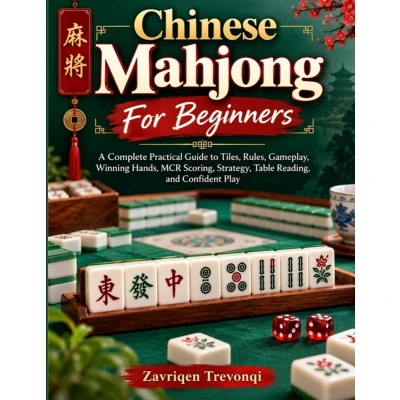
Ready to learn Chinese Mahjong without feeling lost at the table?If the tiles look confusing, the rules seem overwhelming, or you understand how to make groups but still do not know what to keep, what to discard, when to call, how to build a winning hand, or how scoring works, this practical beginner's guide gives you a clear path forward.Chinese Mahjong For Beginners takes you through the game step by step, starting with the fundamentals and gradually developing the skills needed for confident play.Inside, you will learn how to: - Recognize the numbered suits, honors, terminals, and flowers- Understand Chows, Pungs, Kongs, pairs, and incomplete tile combinations- Set up the table and organize your tiles correctly- Follow the ordinary turn from draw to discard- Understand when and how claims work- Build and evaluate a developing hand- Recognize useful winning structures and patterns- Understand waits and compare different completion routes- Approach scoring without becoming overwhelmed- Work with the eight-point minimum used by the book's rules framework- Avoid common scoring errors and double-counting problems- Make better discard decisions as your hand develops- Read public information and use visible tiles more effectively- Evaluate what an opponent's discards and exposed groups may suggest- Practice decision-making through drills and review- Turn mistakes from actual games into focused practiceRather than asking you to memorize everything at once, this guide builds your understanding in layers.First, you learn the tiles. Then you learn the table and turn sequence. From there, you learn how hands develop, how winning structures work, how scoring affects your decisions, and how to use public information to make more deliberate choices.The book also emphasizes an important distinction: completing a hand and qualifying to win are not always the same thing. Learning to recognize a promising structure is only part of the process; you also need to understand its scoring potential and the risks involved.You will also find practical reference material, including a quick-reference section, glossary, frequently asked questions, and exercises designed to reinforce what you have learned.You do not need to know everything before you sit down to play.You need a clear foundation, a repeatable decision process, and enough practice to recognize what is happening in front of you.Whether you are preparing for your first games or trying to make your decisions more organized and purposeful, this guide is designed to help you move from confused beginner to more confident player-one hand, one decision, and one lesson at a time.
 Prijshistorie
* Prijshistorie bevat geen data van Amazon, Amazon Marketplace.
Prijzen voor het laatst bijgewerkt op:
 Gerelateerde resultaten
 Productspecificaties


