

€ 13,72 Gratis verzending

Uitgelicht
|
|
13,72 |
Naar shop
|

|
13,72 |
Naar shop
|

|
15,00 |
Naar shop
|
| VERGELIJK ALLE AANBIEDERS (3) | ||
 Beschrijving
Vergelijk aanbieders (3)
€ 13,72 Gratis verzending
€ 13,72 Gratis verzending
€ 15,00 € 2,99 verzendkosten Totaal € 17,99
Winkels met andere maten
Beschrijving
(1)
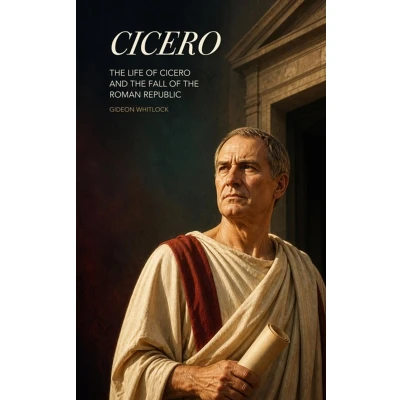
In 63 BC a man whose family had never held the consulship reached the highest office in the Roman state by speech alone, at the earliest legal age, in a system that had given that office to men of his background perhaps twice in the preceding century. Marcus Tullius Cicero held no legion, no province worth commanding, no name inherited from generations of magistrates. What he had was the ability to move a jury, a Senate, and a crowd in the Forum with an argument built in real time, and for roughly two decades that ability made him one of the half dozen men whose opinion changed what Rome did.Then it stopped working, in a sequence that runs like a countdown through the last years of the Republic. In 58 a tribune with a street organization forced him into exile without a trial. In 56 three men who held no relevant office at all met in a town in Etruria and settled the state's business for the next five years without consulting the Senate. In 48 two armies decided the constitution's fate on a plain in Greece while Cicero waited behind the lines, uncertain which side to back. In 43 three men divided the Roman world on a small river island near Bononia and put his name on a list before the day was out.This book follows Cicero from a hill town outside Rome through the law courts, the consulship, the exile, the civil war, and the uneasy return, to the road near Formiae where the list finally caught up with him. Drawing on nine hundred surviving letters, fifty-eight speeches, and the testimony of writers who knew him and writers who despised him, it treats his career as a controlled experiment in how far courts, a Senate, and the spoken word can carry a state once enough men with soldiers decide they no longer have to listen.
 Prijshistorie
* Prijshistorie bevat geen data van Amazon, Amazon Marketplace.
Prijzen voor het laatst bijgewerkt op:
 Gerelateerde resultaten
 Productspecificaties


