
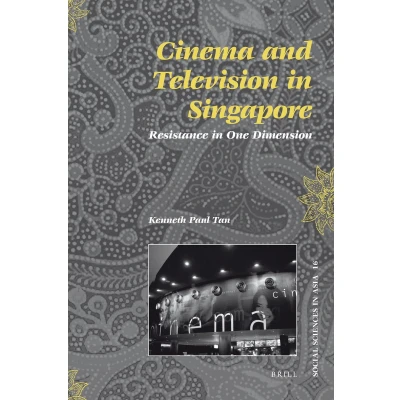
Cinema and Television in Singapore: Resistance One Dimension
Uitgelicht

|
165,00 |
Naar shop
|
| VERGELIJK ALLE AANBIEDERS (1) | ||
 Beschrijving
Bol
Through close readings of contemporary made-in-Singapore films (by Jack Neo, Eric Khoo, and Royston Tan) and television programs (Singapore Idol, sitcoms, and dramas), this book analyzes the prospects of resistance in an advanced capitalist-industrial society with “global city” aspirations. Through close readings of contemporary made-in-Singapore films (by Jack Neo, Eric Khoo, and Royston Tan) and television programs (Singapore Idol, sitcoms, and dramas), this book explores the possibilities and limitations of resistance within an advanced capitalist-industrial society whose authoritarian government skillfully negotiates the risks and opportunities of balancing its on-going nation-building project and its “global city” aspirations. This book adopts a framework inspired by Antonio Gramsci that identifies ideological struggles in art and popular culture, but maintains the importance of Herbert Marcuse’s one-dimensional society analysis as theoretical limits to recognize the power of authoritarian capitalism to subsume works of art and popular culture even as they attempt consciously—even at times successfully—to negate and oppose dominant hegemonic formations.


Vergelijk aanbieders (1)

 Beschrijving
(1)
Beschrijving
(1)
Through close readings of contemporary made-in-Singapore films (by Jack Neo, Eric Khoo, and Royston Tan) and television programs (Singapore Idol, sitcoms, and dramas), this book analyzes the prospects of resistance in an advanced capitalist-industrial society with “global city” aspirations. Through close readings of contemporary made-in-Singapore films (by Jack Neo, Eric Khoo, and Royston Tan) and television programs (Singapore Idol, sitcoms, and dramas), this book explores the possibilities and limitations of resistance within an advanced capitalist-industrial society whose authoritarian government skillfully negotiates the risks and opportunities of balancing its on-going nation-building project and its “global city” aspirations. This book adopts a framework inspired by Antonio Gramsci that identifies ideological struggles in art and popular culture, but maintains the importance of Herbert Marcuse’s one-dimensional society analysis as theoretical limits to recognize the power of authoritarian capitalism to subsume works of art and popular culture even as they attempt consciously—even at times successfully—to negate and oppose dominant hegemonic formations.
 Productspecificaties
| EAN |
|
|---|---|
| Maat |
|
 Prijshistorie
Prijzen voor het laatst bijgewerkt op:
 Gerelateerde resultaten


