








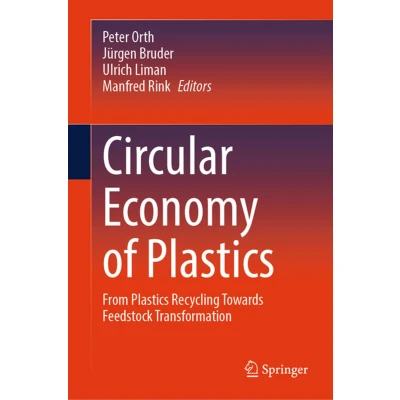
Circular Economy of Plastics
Uitgelicht

|
169,00 |
Naar shop
|
 Beschrijving
Bol
This unique book provides comprehensive and holistic information on the circular economy of plastics - products and their design for circularity, markets and producer responsibility, recovery of wastes and resource responsibility, and plastics manufacturing with circular feedstocks. The book looks at all stages of the plastic value chain: Production with renewable raw materials instead of oil, waste avoidance, recycling and the necessary use of recyclates, thermal treatment for unavoidable and non-recyclable waste. Martin Faulstich To achieve our climate targets, we need climate-neutral plastics. For this purpose, the following circular raw materials are available: Recyclates, biomass, and CO2. The life cycle of plastics must not end at the factory gate, product design must consider the end of life. Plastic waste must be valued to motivate consumers to collect and sort it. André Bardow Plastic is in most cases the most climate-friendly option and, as a hidden climate champion, is an important building block in the fight against the climate crisis. Philipp Lehner The book delves into the complexities of creating a closed-loop system for plastics exploring challenges and opportunities associated with recycling, feedstock diversification, and technological advancements. Peter Vanacker Contents Plastic – the material Circular Economy of Plastic – product , markets, wastes, raw materials Circular feedstock – renewable carbon sources LCA, PCF, Digitization, Standardization Regulatory framework and recycled content quota Target groups Decision-makers and experts in the industry Students, lecturers, scholars in academia Policy makers, national and international public authorities NGOs and business media The editors Dr. Peter Orth was Managing Director of German and European plastics associations. Dr. Jürgen Bruder was Managing Director of national and international plastics associations. Dr. Ulrich Liman was Senior Manager with the plastics industry in Germany, Japan and China. Manfred Rink has worked in management positions in the automotive and plastic industry. This unique book provides comprehensive and holistic information on the circular economy of plastics - products and their design for circularity, markets and producer responsibility, recovery of wastes and resource responsibility, and plastics manufacturing with circular feedstocks. The central part of the book is on circularity and circular feedstocks, embedded in a framework of chapters on the relevant properties of plastic as a material, its ecosystems and mass streams across Europe on the one hand and of chapters on Life Cycle Analysis and Product Carbon Footprint, on digitalisation, logistics, and standardization on the other hand. Comprehensive information is provided on relevant EU-regulation and on national regulation in Europe, too. A knowledge body contains information on relevant associations and networks, on recent studies on the topics mentioned, and an extensive glossary. Thus the book is a compendium of information on the dynamically evolving realm of the circular economy providing insight and clarity into complex and puzzling structures and positions. The book addresses professionals in a wide range of industries together with scholars and students in science and technology as wells as policy makers, authorities, and the media.


Vergelijk aanbieders (1)

 Beschrijving
(1)
Beschrijving
(1)
This unique book provides comprehensive and holistic information on the circular economy of plastics - products and their design for circularity, markets and producer responsibility, recovery of wastes and resource responsibility, and plastics manufacturing with circular feedstocks. The book looks at all stages of the plastic value chain: Production with renewable raw materials instead of oil, waste avoidance, recycling and the necessary use of recyclates, thermal treatment for unavoidable and non-recyclable waste. Martin Faulstich To achieve our climate targets, we need climate-neutral plastics. For this purpose, the following circular raw materials are available: Recyclates, biomass, and CO2. The life cycle of plastics must not end at the factory gate, product design must consider the end of life. Plastic waste must be valued to motivate consumers to collect and sort it. André Bardow Plastic is in most cases the most climate-friendly option and, as a hidden climate champion, is an important building block in the fight against the climate crisis. Philipp Lehner The book delves into the complexities of creating a closed-loop system for plastics exploring challenges and opportunities associated with recycling, feedstock diversification, and technological advancements. Peter Vanacker Contents Plastic – the material Circular Economy of Plastic – product , markets, wastes, raw materials Circular feedstock – renewable carbon sources LCA, PCF, Digitization, Standardization Regulatory framework and recycled content quota Target groups Decision-makers and experts in the industry Students, lecturers, scholars in academia Policy makers, national and international public authorities NGOs and business media The editors Dr. Peter Orth was Managing Director of German and European plastics associations. Dr. Jürgen Bruder was Managing Director of national and international plastics associations. Dr. Ulrich Liman was Senior Manager with the plastics industry in Germany, Japan and China. Manfred Rink has worked in management positions in the automotive and plastic industry. This unique book provides comprehensive and holistic information on the circular economy of plastics - products and their design for circularity, markets and producer responsibility, recovery of wastes and resource responsibility, and plastics manufacturing with circular feedstocks. The central part of the book is on circularity and circular feedstocks, embedded in a framework of chapters on the relevant properties of plastic as a material, its ecosystems and mass streams across Europe on the one hand and of chapters on Life Cycle Analysis and Product Carbon Footprint, on digitalisation, logistics, and standardization on the other hand. Comprehensive information is provided on relevant EU-regulation and on national regulation in Europe, too. A knowledge body contains information on relevant associations and networks, on recent studies on the topics mentioned, and an extensive glossary. Thus the book is a compendium of information on the dynamically evolving realm of the circular economy providing insight and clarity into complex and puzzling structures and positions. The book addresses professionals in a wide range of industries together with scholars and students in science and technology as wells as policy makers, authorities, and the media.
 Productspecificaties
| EAN |
|
|---|---|
| Maat |
|
 Prijshistorie
Prijzen voor het laatst bijgewerkt op:
 Gerelateerde resultaten


