


€ 149,79 Gratis verzending

Uitgelicht
|
|
149,79 |
Naar shop
|

|
152,59 |
Naar shop
|

|
152,59 |
Naar shop
|
| VERGELIJK ALLE AANBIEDERS (3) | ||
 Beschrijving
Vergelijk aanbieders (3)
€ 149,79 Gratis verzending
€ 152,59 Gratis verzending
€ 152,59 Gratis verzending
Winkels met andere maten
Beschrijving
(1)
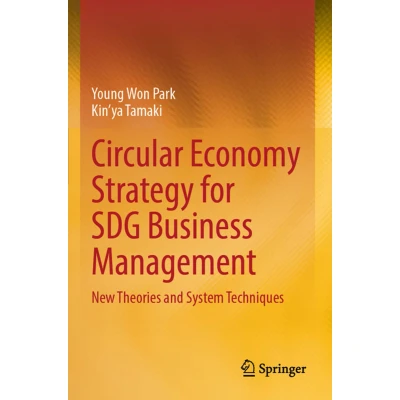
Compared to global movements, however, the responses to the CE trend in Japan, the Japanese government's CE policy, and CE management strategy in the Japanese industrial world have lagged considerably behind. This book delineates the framework to research and develop new theories and system techniques for a circular economy (CE) strategy to fulfill Sustainable Development Goals (SDGs) in the era of digital, sustainable, and green transformation (DX, SX, and GX). For that purpose, five system techniques are presented here: (1) multi-generational and circular economy value chain management (CE-VCM), (2) cyclical resource supply and resource collection, (3) CE product planning and digital marketing, (4) lifecycle design of IoT (Internet of Things) products, and (5) a sharing platform and application software compatible with CE-VCM. The book also explores how to proceed with international trends in research concerning CE policies and standards in Japan, the EU, and the USA. Included are case studies of advanced CE companies in diverse industries, such as automobiles, electronics, food and agriculture, and software, to name just a few. Surveys of trends in CE policy and successful industry case studies in Japan are presented and compared with those in other countries. In the past, the Japanese manufacturing industry was primarily based on the business model of selling off the products introduced into the market and the 3R tactics of “reuse, reduce, and recycle” to follow up on waste disposal. Compared to global movements, however, the responses to the CE trend in Japan, the Japanese government's CE policy, and CE management strategy in the Japanese industrial world have lagged considerably behind. In the future, when Japanese companies conduct global business transactions, it will be pivotal for them to implement a CE management strategy compatible with the ISO 59000 series. The Japanese government and global companies must respond to the SDGs, including Goal 12: Producer and Consumer Responsibility. To keep up with external environmental trends, Japanese global firms also must respond to the changes discussed in this informative volume.
 Prijshistorie
 * Prijshistorie bevat geen data van Amazon, Amazon Marketplace.
Prijzen voor het laatst bijgewerkt op:
 Gerelateerde resultaten
 Productspecificaties


