

€ 23,26 Gratis verzending

Gesponsorde links
|
|
23,26 |
Naar shop
|

|
23,26 |
Naar shop
|

|
26,99 |
Naar shop
|
| VERGELIJK ALLE AANBIEDERS (3) | ||
 Beschrijving
Vergelijk aanbieders (3)
Gesponsorde links · Sommige shops betalen ons een vergoeding
€ 23,26 Gratis verzending
€ 23,26 Gratis verzending
€ 26,99 Gratis verzending
Winkels met andere maten
Beschrijving
(1)
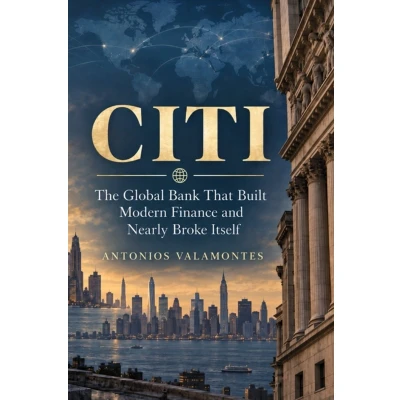
For more than two centuries, Citi has stood near the center of American and global finance.Beginning with the City Bank of New York in 1812, the institution that became Citigroup helped build the infrastructure of modern banking: international branches, foreign-exchange networks, consumer credit, electronic banking, global payments, securities markets, and the financial supermarket.But the same complexity that made Citi powerful also made it difficult to control.CITI traces the bank's transformation from a nineteenth-century New York institution into one of the world's most interconnected financial organizations. It examines the expansion of National City Bank, Walter Wriston's global banking model, John Reed's technology-driven transformation, the creation of Citigroup with Travelers, the growth of structured finance, the 2008 rescue, Citi Holdings, post-crisis regulation, the 2020 control orders, and Jane Fraser's effort to build a simpler institution.Drawing extensively on annual reports, regulatory filings, Federal Reserve and FDIC records, congressional material, enforcement actions, and contemporaneous reporting, Antonios Valamontes separates documented fact from corporate mythology and hindsight.The central question is larger than Citi itself: How can a financial institution preserve the scale and connectivity that make a global bank valuable without allowing complexity to outrun management, risk controls, and regulation?CITI is a history of one bank-but also a history of how modern finance became global, interconnected, systemically important, and extraordinarily difficult to govern.
 Prijshistorie
* Prijshistorie bevat geen data van Amazon, Amazon Marketplace.
Prijzen voor het laatst bijgewerkt op:
 Gerelateerde resultaten
 Productspecificaties


