








Civilising Rural Ireland
Uitgelicht

|
31,99 |
Naar shop
|
 Beschrijving
Bol
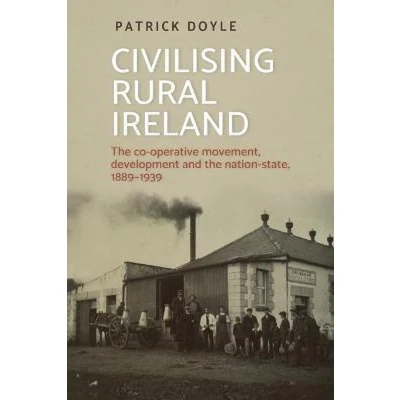
Civilising rural Ireland challenges predominant narratives of Irish history that explain the emergence of the nation-state through the lens of political conflict and violence. Instead the book takes as its focus the numerous leaders, organisers, and members of the Irish co-operative movement. The introduction of co-operative societies into the Irish countryside during the late nineteenth century transformed rural society and created an enduring economic legacy. Civilising rural Ireland challenges predominant narratives of Irish history that explain the emergence of the nation-state through the lens of political conflict and violence, and instead focuses on the numerous leaders, organisers and members of the Irish co-operative movement. Together, these people captured the spirit of change as they became part of a wider project of cultural nationalism that responded to nineteenth-century economic problems including depressions and high levels of emigration. The co-operative movement quickly established a swathe of creameries, shops and credit societies. This radical reorganisation of the countryside precipitated the spread of new economic ideas and the promotion of mutually owned businesses, and contributed to the creation of a distinctive Irish political economy. Through the creative use of a wide array of local and national sources, many of which are examined here for the first time, Patrick Doyle shows how modern Ireland emerged out of the social transformation prompted by the Irish co-operative movement. The work of previously overlooked co-operative experts is critically examined and reinserted into the process of state development, showing how the co-operative movement became an indispensable part of Irish state infrastructure after independence in 1922, and giving historical context to current debates about economics, development and political organisation. The book will appeal to a wide audience interested in modern Irish history. It sets the agenda for future research into the history of co-operative movements and offers a unique take on a crucial period of Ireland’s history. The introduction of co-operative societies into the Irish countryside during the late-nineteenth century transformed rural society and created an enduring economic legacy. Civilising rural Ireland challenges predominant narratives of Irish history that explain the emergence of the nation-state through the lens of political conflict and violence. Instead the book takes as its focus the numerous leaders, organisers, and members of the Irish co-operative movement. Together these people captured the spirit of change as they created a modern Ireland through their reorganisation of the countryside, the spread of new economic ideas, and the promotion of mutually-owned businesses. Besides giving a comprehensive account of the co-operative movement’s introduction to Irish society the book offers an analysis of the importance of these radical economic ideas upon political Irish nationalism.An electronic edition of this book is freely available under a Creative Commons (CC BY-NC-ND) licence.


Vergelijk aanbieders (1)

 Beschrijving
(1)
Beschrijving
(1)
Civilising rural Ireland challenges predominant narratives of Irish history that explain the emergence of the nation-state through the lens of political conflict and violence. Instead the book takes as its focus the numerous leaders, organisers, and members of the Irish co-operative movement. The introduction of co-operative societies into the Irish countryside during the late nineteenth century transformed rural society and created an enduring economic legacy. Civilising rural Ireland challenges predominant narratives of Irish history that explain the emergence of the nation-state through the lens of political conflict and violence, and instead focuses on the numerous leaders, organisers and members of the Irish co-operative movement. Together, these people captured the spirit of change as they became part of a wider project of cultural nationalism that responded to nineteenth-century economic problems including depressions and high levels of emigration. The co-operative movement quickly established a swathe of creameries, shops and credit societies. This radical reorganisation of the countryside precipitated the spread of new economic ideas and the promotion of mutually owned businesses, and contributed to the creation of a distinctive Irish political economy. Through the creative use of a wide array of local and national sources, many of which are examined here for the first time, Patrick Doyle shows how modern Ireland emerged out of the social transformation prompted by the Irish co-operative movement. The work of previously overlooked co-operative experts is critically examined and reinserted into the process of state development, showing how the co-operative movement became an indispensable part of Irish state infrastructure after independence in 1922, and giving historical context to current debates about economics, development and political organisation. The book will appeal to a wide audience interested in modern Irish history. It sets the agenda for future research into the history of co-operative movements and offers a unique take on a crucial period of Ireland’s history. The introduction of co-operative societies into the Irish countryside during the late-nineteenth century transformed rural society and created an enduring economic legacy. Civilising rural Ireland challenges predominant narratives of Irish history that explain the emergence of the nation-state through the lens of political conflict and violence. Instead the book takes as its focus the numerous leaders, organisers, and members of the Irish co-operative movement. Together these people captured the spirit of change as they created a modern Ireland through their reorganisation of the countryside, the spread of new economic ideas, and the promotion of mutually-owned businesses. Besides giving a comprehensive account of the co-operative movement’s introduction to Irish society the book offers an analysis of the importance of these radical economic ideas upon political Irish nationalism.An electronic edition of this book is freely available under a Creative Commons (CC BY-NC-ND) licence.
 Productspecificaties
| EAN |
|
|---|---|
| Maat |
|
 Prijshistorie
Prijzen voor het laatst bijgewerkt op:
 Gerelateerde resultaten


