


€ 225,00 Gratis verzending

Gesponsorde links
|
|
225,00 |
Naar shop
|

|
235,03 |
Naar shop
|
| VERGELIJK ALLE AANBIEDERS (2) | ||
 Beschrijving
Vergelijk aanbieders (2)
Gesponsorde links · Sommige shops betalen ons een vergoeding
€ 225,00 Gratis verzending
€ 235,03 Gratis verzending
Winkels met andere maten
Beschrijving
(1)
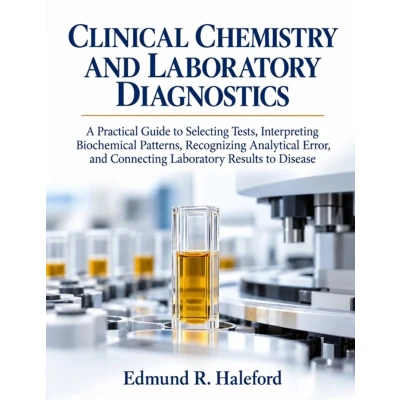
A laboratory result can be accurate and still lead clinical reasoning in the wrong direction.An elevated value may reflect disease-or specimen handling. An unexpected electrolyte result may represent a genuine physiologic disturbance-or interference. Two abnormal tests may appear unrelated until the biochemical pattern is considered as a whole. Clinical Chemistry and Laboratory Diagnostics is written for the point where laboratory science meets clinical judgment. Instead of treating test results as isolated numbers to memorize, the book shows how to select appropriate investigations, recognize meaningful biochemical patterns, question unreliable findings, and connect laboratory abnormalities with the disease processes that may explain them. The reader is taken through the practical questions that arise every day in laboratory medicine: Was this the right test to order? Could a preanalytical problem have changed the result? Does the pattern fit renal, hepatic, endocrine, metabolic, cardiac, or another disease process? Is the abnormality clinically important-or simply outside a reference interval? Could interference or analytical error explain the discrepancy? Should the result be repeated, confirmed, or investigated with another test?That approach makes the book useful far beyond memorizing reference ranges.Common biochemical investigations are connected to physiology and disease so that renal function, liver enzymes, electrolytes, acid-base disorders, glucose metabolism, lipids, proteins, hormones, cardiac markers, and related laboratory findings can be interpreted as patterns rather than disconnected values.Equal attention is given to the laboratory side of the equation: specimen quality, biological variation, analytical interference, quality control, reference intervals, unexpected results, and the errors that can occur before, during, and after analysis.The full-color interior and stunning images inside this textbook make complex laboratory concepts easier to compare and revisit, giving biochemical relationships, diagnostic patterns, and teaching material stronger visual definition during study and clinical review.For laboratory professionals, clinicians, trainees, and students, the practical aim is simple: know why a test is being ordered, know when its result deserves confidence, and know how that result fits the clinical picture.Use Clinical Chemistry and Laboratory Diagnostics to move beyond isolated numbers and develop a more dependable approach to test selection, pattern interpretation, analytical error, and the laboratory evidence behind clinical diagnosis.
 Prijshistorie
* Prijshistorie bevat geen data van Amazon.
Prijzen voor het laatst bijgewerkt op:
 Gerelateerde resultaten
 Productspecificaties


