
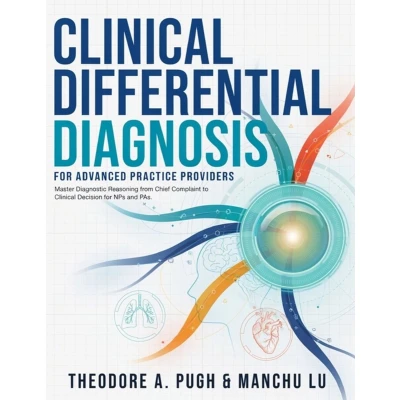
Clinical DIFFERENTIAL DIAGNOSIS for ADVANCED PRACTICE PROVIDERS: Master Diagnostic Reasoning from Chief Complaint to Decision NPs and PAs.
Uitgelicht

|
73,99 |
Naar shop
|

|
77,03 |
Naar shop
|

|
77,03 |
Naar shop
|
| VERGELIJK ALLE AANBIEDERS (3) | ||
 Beschrijving
Bol
When a patient presents with chest pain, dizziness, fatigue, pelvic pain, or altered mental status, the hardest question is often not what to treat. It is what you might be missing. Clinical Differential Diagnosis for Advanced Practice Providers gives nurse practitioners, physician assistants, and advanced practice students a structured way to move from an undifferentiated chief complaint to a focused, probability-ranked clinical decision. Instead of organizing information as disconnected disease facts, this comprehensive clinical reasoning guide mirrors the way patients actually present in primary care, urgent care, acute care, emergency, and specialty settings. Each complaint-based chapter helps you identify dangerous alternatives early, compare competing explanations, and choose the next diagnostic step with greater purpose. Inside, you will learn how to: - Build prioritized differential diagnoses using illness scripts and mechanism-based reasoning- Recognize must-not-miss conditions and red flags before settling on a common diagnosis- Apply pre-test probability, likelihood ratios, Bayesian reasoning, and validated clinical decision tools- Distinguish look-alike presentations through high-value history and examination findings- Sequence laboratory testing, imaging, consultation, and referral without reflexive overtesting- Counter anchoring, premature closure, diagnostic momentum, and other common sources of error- Communicate uncertainty, strengthen handoffs, and create safer follow-up plans Coverage spans chest pain, dyspnea, abdominal pain, headache, fever, altered mental status, dizziness and syncope, back and joint pain, fatigue and weakness, skin lesions, genitourinary and pelvic complaints, endocrine and hematologic presentations, neurological deficits, psychiatric symptoms, and age-specific pediatric and geriatric considerations. High-stakes synthesis cases show how the frameworks work when presentations overlap and the first test is inconclusive. Three practical appendices provide quick access to system-based red flags, laboratory interpretation guidance, and pre-test probability and likelihood ratio references. Whether you are preparing for AANP, ANCC, PANCE, or PANRE-style clinical questions, transitioning into practice, or refining your judgment after years of patient care, this book helps replace scattered recall with a disciplined diagnostic process. Move beyond memorizing lists. Build a reasoning system you can return to whenever the diagnosis is uncertain and the consequences of missing it matter.


 Beschrijving
(1)
Beschrijving
(1)
When a patient presents with chest pain, dizziness, fatigue, pelvic pain, or altered mental status, the hardest question is often not what to treat. It is what you might be missing. Clinical Differential Diagnosis for Advanced Practice Providers gives nurse practitioners, physician assistants, and advanced practice students a structured way to move from an undifferentiated chief complaint to a focused, probability-ranked clinical decision. Instead of organizing information as disconnected disease facts, this comprehensive clinical reasoning guide mirrors the way patients actually present in primary care, urgent care, acute care, emergency, and specialty settings. Each complaint-based chapter helps you identify dangerous alternatives early, compare competing explanations, and choose the next diagnostic step with greater purpose. Inside, you will learn how to: - Build prioritized differential diagnoses using illness scripts and mechanism-based reasoning- Recognize must-not-miss conditions and red flags before settling on a common diagnosis- Apply pre-test probability, likelihood ratios, Bayesian reasoning, and validated clinical decision tools- Distinguish look-alike presentations through high-value history and examination findings- Sequence laboratory testing, imaging, consultation, and referral without reflexive overtesting- Counter anchoring, premature closure, diagnostic momentum, and other common sources of error- Communicate uncertainty, strengthen handoffs, and create safer follow-up plans Coverage spans chest pain, dyspnea, abdominal pain, headache, fever, altered mental status, dizziness and syncope, back and joint pain, fatigue and weakness, skin lesions, genitourinary and pelvic complaints, endocrine and hematologic presentations, neurological deficits, psychiatric symptoms, and age-specific pediatric and geriatric considerations. High-stakes synthesis cases show how the frameworks work when presentations overlap and the first test is inconclusive. Three practical appendices provide quick access to system-based red flags, laboratory interpretation guidance, and pre-test probability and likelihood ratio references. Whether you are preparing for AANP, ANCC, PANCE, or PANRE-style clinical questions, transitioning into practice, or refining your judgment after years of patient care, this book helps replace scattered recall with a disciplined diagnostic process. Move beyond memorizing lists. Build a reasoning system you can return to whenever the diagnosis is uncertain and the consequences of missing it matter.
 Productspecificaties
 Prijshistorie
* Prijshistorie bevat geen data van Amazon, Amazon Marketplace.
Prijzen voor het laatst bijgewerkt op:
 Gerelateerde resultaten


