


€ 215,00 Gratis verzending

Uitgelicht
|
|
215,00 |
Naar shop
|

|
234,75 |
Naar shop
|

|
234,75 |
Naar shop
|
| VERGELIJK ALLE AANBIEDERS (3) | ||
 Beschrijving
Vergelijk aanbieders (3)
€ 215,00 Gratis verzending
€ 234,75 Gratis verzending
€ 234,75 Gratis verzending
Winkels met andere maten
Beschrijving
(1)
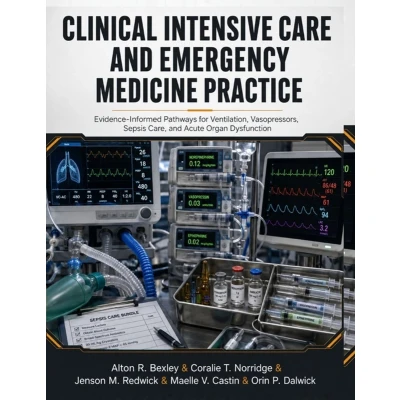
Clinical Intensive Care and Emergency Medicine Practice is a practical guide for managing high-acuity patients when the clinical picture is changing quickly.In critical care and emergency medicine, one problem often becomes several. Respiratory failure may affect circulation. Shock may worsen kidney function. Sepsis may progress despite early treatment. A ventilator setting, vasopressor dose, laboratory trend, or change in mental status may signal that the current plan needs immediate reassessment.This book is built around those connected decisions.What This Book Helps You DoSupport breathing with purpose Approach hypoxemia, hypercapnia, oxygen escalation, noninvasive support, mechanical ventilation principles, blood-gas interpretation, and signs that respiratory support is failing.Manage circulatory instability Review shock recognition, perfusion assessment, fluid strategy, vasopressor principles, urine-output monitoring, lactate trends, and response to hemodynamic support.Respond to sepsis and severe infection Organize early evaluation, source control thinking, antimicrobial priorities, culture review, resuscitation, organ-support needs, and treatment reassessment.Recognize acute organ dysfunction Strengthen decision-making around acute kidney injury, electrolyte emergencies, acid-base disorders, neurologic decline, metabolic crises, severe bleeding, thromboembolism, and multiorgan failure.Reassess at the bedside Use vital signs, ventilatory status, laboratory trends, imaging findings, medication response, bedside examination, and team communication to decide whether the patient is improving, worsening, or needs escalation.What You Will Find Inside- Evidence-informed pathways for ventilation, vasopressors, sepsis care, and organ support- Practical frameworks for unstable patients in ICU, emergency, and high-acuity inpatient settings- Clinical checkpoints for recognizing deterioration before collapse occurs- Guidance on monitoring response, adjusting therapy, escalating care, and communicating urgent changes- Clear support for residents, emergency clinicians, hospitalists, intensivists-in-training, nurse practitioners, physician assistants, and critical-care learnersClinical Intensive Care and Emergency Medicine Practice is not a list of isolated protocols. It is a structured bedside reference for turning urgent physiologic changes into clearer decisions, safer escalation, and more disciplined critical-care practice.
 Prijshistorie
 * Prijshistorie bevat geen data van Amazon, Amazon Marketplace.
Prijzen voor het laatst bijgewerkt op:
 Gerelateerde resultaten
 Productspecificaties


