


€ 129,00 Gratis verzending

Gesponsorde links
|
|
129,00 |
Naar shop
|

|
137,55 |
Naar shop
|

|
137,55 |
Naar shop
|
| VERGELIJK ALLE AANBIEDERS (3) | ||
 Beschrijving
Vergelijk aanbieders (3)
Gesponsorde links · Sommige shops betalen ons een vergoeding
€ 129,00 Gratis verzending
€ 137,55 Gratis verzending
€ 137,55 Gratis verzending
Winkels met andere maten
Beschrijving
(1)
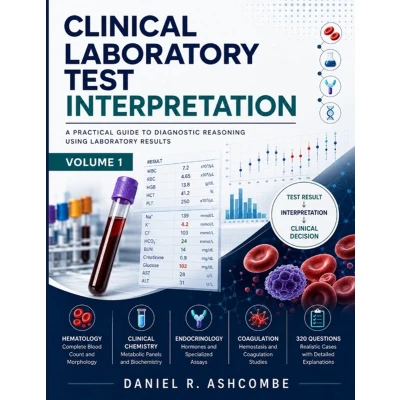
Most laboratory teaching stops at the number. This book starts there.A result is not a fact about a patient. It is a measurement - produced by a physical process, on a specimen that may or may not represent the patient, analysed by a method with known limitations, and reported against an interval derived from a population the patient may not belong to. Every one of those steps can fail, and each failure has a recognisable signature. Clinical Laboratory Test Interpretation teaches you to read those signatures. Across 40 chapters it builds a single reasoning sequence - establish whether the abnormality is real, judge its size, explain it biologically, test that explanation against the rest of the data, attack it, and only then commit - and applies it consistently to hematology, clinical chemistry, endocrine testing, and coagulation. What is inside- 40 chapters across five parts: Foundations of Laboratory Practice, Hematology, Clinical Chemistry, Endocrine Laboratory Medicine, and Coagulation.- 80 staged clinical cases that unfold the way real cases do - presentation, reasoning, discordance, resolution, teaching point.- 320 practice questions, each with a written rationale explaining why the wrong answers are wrong.- 40 interpretation frameworks- numbered, stepwise procedures for the bedside or the bench.- 38 original figures and 30 tables, including algorithms for anemia, hemolysis, hyponatremia, acid-base disorders, and discordant results.- Full back matter: glossary, unit-conversion appendix, critical-value protocol, framework index, and subject index. What makes it differentReference books tell you what a test measures. This one tells you when to believe it. Whole chapters address the questions that decide clinical outcomes and appear in no lab-values manual: why the same potassium means two different things in two patients; how to work a result you do not believe; when a normal result is the most important finding in the case; why a troponin above the cut-off is not a heart attack; and how assay interference manufactures diseases that never existed. Who it is for- Medical students in clinical years and junior residents- Medical and clinical laboratory science students (MLS/CLS)- Nursing and advanced-practice students who must act on results- Practising laboratory scientists seeking clinical context- Candidates preparing for pathology or laboratory science certification Volume 1 is complete in itself, with its own glossary, appendices, and index. Portions of this book's text were generated with the assistance of artificial intelligence and were subsequently reviewed and edited prior to publication.
 Prijshistorie
* Prijshistorie bevat geen data van Amazon, Amazon Marketplace.
Prijzen voor het laatst bijgewerkt op:
 Gerelateerde resultaten
 Productspecificaties


