


€ 125,00 Gratis verzending

Uitgelicht
|
|
125,00 |
Naar shop
|

|
130,35 |
Naar shop
|

|
130,35 |
Naar shop
|
| VERGELIJK ALLE AANBIEDERS (3) | ||
 Beschrijving
Vergelijk aanbieders (3)
€ 125,00 Gratis verzending
€ 130,35 Gratis verzending
€ 130,35 Gratis verzending
Winkels met andere maten
Beschrijving
(1)
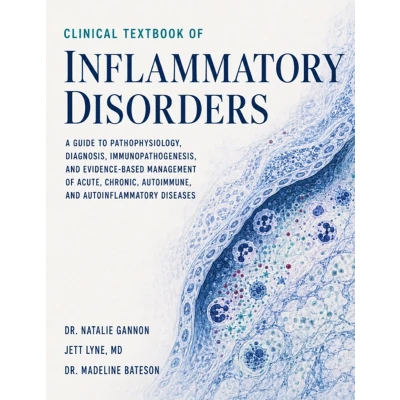
Inflammation is not a diagnosis. It is a biological process capable of protecting tissue, driving chronic disease, damaging entire organ systems, and creating life-threatening emergencies.CLINICAL TEXTBOOK OF INFLAMMATORY DISORDERS provides a mechanism-led approach to understanding, evaluating, and managing acute, chronic, autoimmune, and autoinflammatory diseases. Written for residents, fellows, internists, rheumatologists, and clinicians across related specialties, this clinical reference connects immune biology directly to laboratory findings, imaging decisions, differential diagnosis, and therapeutic selection.Beginning with the vascular, cellular, innate, and adaptive mechanisms of inflammation, the book explains how failures of immune tolerance, cytokine signalling, complement activation, inflammasome function, and resolution pathways lead to disease. Readers are then guided through the interpretation of inflammatory markers, autoantibodies, complement studies, synovial fluid, tissue biopsy, ultrasound, MRI, FDG-PET, and high-resolution CT.Inside, readers will explore: - Acute and chronic inflammatory mechanisms - Innate immunity, adaptive immunity, and loss of self-tolerance - Cytokine networks and mechanism-based therapeutic targets - ESR, CRP, ANA, ANCA, rheumatoid factor, anti-CCP, ferritin, and complement interpretation - Rheumatoid arthritis, spondyloarthritis, psoriatic disease, lupus, and systemic vasculitis - Autoinflammatory syndromes and periodic fever disorders - Inflammatory bowel, skin, lung, kidney, neurologic, and muscular diseases - Conventional DMARDs, biologic therapies, JAK inhibitors, and therapeutic monitoring - Infection screening, vaccination, pregnancy, perioperative care, and malignancy surveillance during immunosuppression - Cytokine storm, HLH, macrophage activation syndrome, checkpoint inhibitor toxicity, and other inflammatory emergenciesThe text emphasises the clinical reasoning that connects immunopathogenesis to diagnosis and evidence-based treatment. It also examines the limitations of classification criteria, inflammatory biomarkers, serologic testing, and therapeutic evidence so that readers can interpret results within the correct clinical setting.Build a stronger framework for recognising multisystem inflammatory disease, selecting focused investigations, distinguishing infection from inflammatory activity, and matching treatment to the biological mechanism driving the disorder.CLINICAL TEXTBOOK OF INFLAMMATORY DISORDERS is designed as an authoritative reference for physicians in training and clinicians managing complex immune-mediated disease.
 Prijshistorie
 * Prijshistorie bevat geen data van Amazon, Amazon Marketplace.
Prijzen voor het laatst bijgewerkt op:
 Gerelateerde resultaten
 Productspecificaties


