


€ 29,00 Gratis verzending

Uitgelicht
|
|
29,00 |
Naar shop
|

|
31,10 |
Naar shop
|

|
31,80 |
Naar shop
|
| VERGELIJK ALLE AANBIEDERS (3) | ||
 Beschrijving
Vergelijk aanbieders (3)
€ 29,00 Gratis verzending
€ 31,10 Gratis verzending
€ 31,80 Gratis verzending
Winkels met andere maten
Beschrijving
(1)
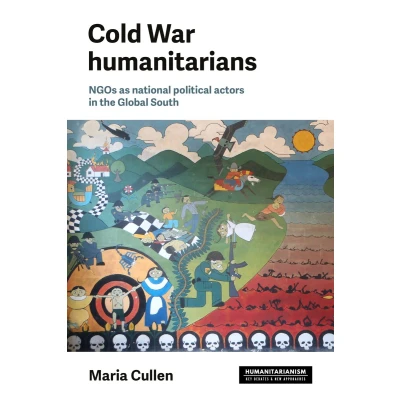
This book compares Oxfam and MSF’s humanitarian programmes in the 1980s to illuminate how British and French political cultures conditioned their opposing interpretations of ethical action during the Cold War. In so doing, it demonstrates that emerging norms of humanitarian intervention and human rights were fundamentally contested in this decade. Humanitarian practitioners clashed constantly over the morality of specific aid interventions and the relevance of human rights to their work during the Cold War. These tensions were strikingly visible in how Oxfam and Médecins Sans Frontières (MSF) responded to human suffering in post-Khmer Rouge Cambodia, displacement from the Salvadoran civil war, and famine in Ethiopia between 1979 and 1988. This book innovatively adopts a national comparative approach to analyse the political cultures that animated the NGOs’ opposing visions of ethical intervention in these contexts. While MSF’s anticommunist leaders emerged from the ideologically charged currents of the French left in the 1970s, Oxfam was an older organisation, closer to the British establishment, which nevertheless offered a home for radical views on the potential of solidarity through humanitarianism in this era. This book makes a significant contribution to discussions around the professionalisation of a humanitarian system by uncovering the complex identities of individual NGOs that have conditioned global norms. Its value also lies in the equal attention paid to European civil societies and the practice of humanitarian action in the Global South. It illuminates the roles played by humanitarians and the populations they interacted with as historical actors who shaped the discourses around human rights and standardisation which crystallised into professional codes in the 1990s. By contextualising the decisions taken by humanitarians in the field within the NGOs’ unique backgrounds, the book unravels the complex story of how and why humanitarian NGOs exercised power in distinct ways in the global Cold War. Oxfam and MSF clashed over the meaning of ethical humanitarian action and the relevance of human rights to their work during the Cold War. To understand why, this book compares how the NGOs’ identities were forged within specific political cultures in Britain and France. While MSF gave voice to the anti-totalitarian convictions of disillusioned ex-communists, Oxfam’s members had a less ideologically charged background and gravitated towards criticism of Western realpolitik, leading the NGO to engage differently with leftist actors in negotiating access to suffering populations in the Global South. Across three case-studies – post-Khmer Rouge Cambodia and displacement in Thailand, the Salvadoran civil war and refugees in Honduras, and the Ethiopian famine – this book demonstrates that the NGOs’ interactions with refugees, civilians and states are best understood when contextualised within the national civil societies and social movements they emerged from.
 Prijshistorie
 * Prijshistorie bevat geen data van Amazon Marketplace, Amazon.
Prijzen voor het laatst bijgewerkt op:
 Gerelateerde resultaten
 Productspecificaties


