
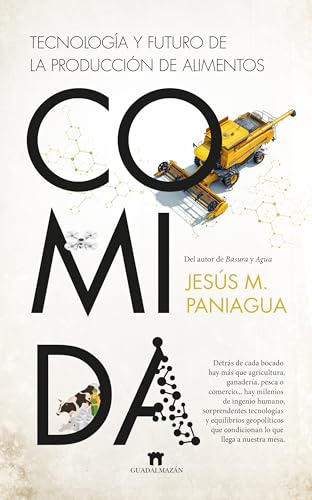
Comida. Tecnología y futuro de la producción alimentos
Uitgelicht

|
25,10 |
Naar shop
|

|
25,10 |
Naar shop
|

|
25,99 |
Naar shop
|
| VERGELIJK ALLE AANBIEDERS (3) | ||
 Beschrijving
Bol
Five thousand years ago, Pharaoh Zoser's stele depicted children crying and elderly people huddled together in hunger. In Ancient Rome, a farmer barely managed to produce a ton of wheat a year. Today, that figure has multiplied a thousandfold, but we face an unprecedented challenge: feeding more than 10 billion people on a planet under pressure from climate, water, and biodiversity issues. Every plate hides centuries of ingenuity, invisible technologies, and geopolitical balances. A simple fried egg sums up civilization: livestock, fire, metallurgy, and the salt trade. We produce 11 billion tons of food per year--3.7 kilograms per person per day--and yet 30% of fruit is lost in logistics and one in four European trucks travels empty. China stores enough grain to feed its population for almost a year and buys land the size of Ireland in Africa, our cows carry GPS sensors, vertical farms multiply productivity twentyfold, while saffron is priced at thousands of euros per kilo... there are already laboratories producing it without the need for traditional crops. This book unravels this global chessboard: CRISPR genetic scissors, drones patrolling farms, the nitrogen industry, ghost kitchens for delivery, the Loess plateau restored by the Asian giant, and proteins bred in laboratories. From the preserves Appert invented for Napoleon to today's bioreactors, the history of food is the history of civilization. What we put on our plates tomorrow will be decided today at the intersection of history, technology, and power.


 Beschrijving
(1)
Beschrijving
(1)
Five thousand years ago, Pharaoh Zoser's stele depicted children crying and elderly people huddled together in hunger. In Ancient Rome, a farmer barely managed to produce a ton of wheat a year. Today, that figure has multiplied a thousandfold, but we face an unprecedented challenge: feeding more than 10 billion people on a planet under pressure from climate, water, and biodiversity issues. Every plate hides centuries of ingenuity, invisible technologies, and geopolitical balances. A simple fried egg sums up civilization: livestock, fire, metallurgy, and the salt trade. We produce 11 billion tons of food per year--3.7 kilograms per person per day--and yet 30% of fruit is lost in logistics and one in four European trucks travels empty. China stores enough grain to feed its population for almost a year and buys land the size of Ireland in Africa, our cows carry GPS sensors, vertical farms multiply productivity twentyfold, while saffron is priced at thousands of euros per kilo... there are already laboratories producing it without the need for traditional crops. This book unravels this global chessboard: CRISPR genetic scissors, drones patrolling farms, the nitrogen industry, ghost kitchens for delivery, the Loess plateau restored by the Asian giant, and proteins bred in laboratories. From the preserves Appert invented for Napoleon to today's bioreactors, the history of food is the history of civilization. What we put on our plates tomorrow will be decided today at the intersection of history, technology, and power.
 Productspecificaties
 Prijshistorie
* Prijshistorie bevat geen data van Amazon, Amazon Marketplace.
Prijzen voor het laatst bijgewerkt op:
 Gerelateerde resultaten


