


€ 129,00 Gratis verzending

Uitgelicht
|
|
129,00 |
Naar shop
|
| VERGELIJK ALLE AANBIEDERS (1) | ||
 Beschrijving
Vergelijk aanbieders (1)
€ 129,00 Gratis verzending
Winkels met andere maten
Beschrijving
(1)
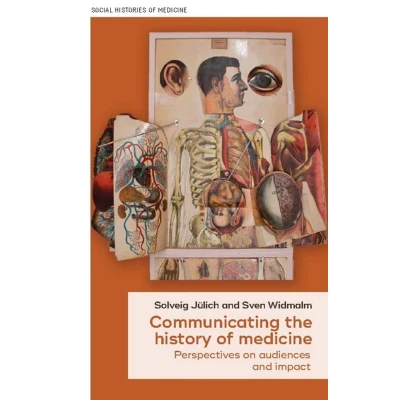
Communicating the History of Medicine offers a collection of case studies on academic outreach from historical and current perspectives. It questions the kind of linear thinking often found in policy or research assessment, instead offering a nuanced picture of both the promises and pitfalls of engaging audiences for research in the humanities. This collection explores the history of medicine’s relationships with its audiences, from the early twentieth century to the present. Throughout, the authors discuss how historians of medicine and other humanities disciplines have interacted with – and impacted – their audiences. Topics examined across the ten chapters include medical education, policy making, exhibitions and museums, and film and television.Historians have always interacted with a variety of audiences and there is a common desire for research to appeal to broader audiences with impact beyond the humanities. For historians of medicine, these often include: government committees and commissions dealing with ethical issues in biomedicine; journalists asking for historical perspectives on new medical discoveries – as well as abuses and controversies; museum curators and visitors; healthcare practitioners and students and sometimes even medical researchers utilising historical material.By examining a range of case studies on academic outreach, Communicating the history of medicine seeks to challenge the idea that communication between researchers and their audiences is unidirectional. By employing a media theoretical perspective, this volume discusses how historians can create impact with audiences for academic knowledge production via ‘audiencing’. Communicating the History of Medicine critically assesses the idea of audience and communication in medical history. This collection offers a range of case studies on academic outreach from historical and current perspectives. It questions the kind of linear thinking often found in policy or research assessment, instead offering a more nuanced picture of both the promises and pitfalls of engaging audiences for research in the humanities. For whom do academic researchers in the humanities write? For academics and, indirectly, at least for students, but there are hopes that work reaches broader audiences and that it will have an impact on policy or among professional experts outside of the humanities. Today impact is more and more discussed in the context of research assessment. Seen from a media theoretical perspective, impact may however be described as a case of ‘audiencing’ and the creation of audiences by means of media technologies.
 Productspecificaties
| EAN |
|
|---|---|
| Maat |
|
 Prijshistorie
Prijzen voor het laatst bijgewerkt op:
 Gerelateerde resultaten


