








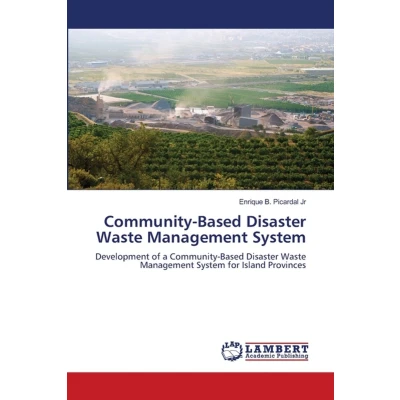
Community Based Disaster Waste Management System: Development of a System for Island Provinces
Uitgelicht

|
42,95 |
Naar shop
|

|
42,95 |
Naar shop
|

|
43,90 |
Naar shop
|
 Beschrijving
Bol
This study presents a community-based disaster waste management system tailored for island provinces, addressing unique geographic, social, and logistical challenges in post-disaster contexts. The framework integrates technical, social, institutional, and financial dimensions to enhance resilience, sustainability, and community empowerment. Key findings indicate that effective waste stream management relies on temporary staging areas, systematic segregation of biodegradable, recyclable, hazardous, and residual waste, and recovery of organic materials through composting, biogas, and biochar, supported by partnerships with recycling markets and cooperatives. Logistics and infrastructure strategies include modular, climate-resilient materials recovery facilities (MRFs), coordinated collection systems, and eco-designed infrastructure to ensure operational continuity. Community engagement and governance are strengthened through participatory planning, cooperative models, and integration of schools, churches, and barangays, fostering local ownership and social cohesion.


 Beschrijving
(2)
Beschrijving
(2)
This study presents a community-based disaster waste management system tailored for island provinces, addressing unique geographic, social, and logistical challenges in post-disaster contexts. The framework integrates technical, social, institutional, and financial dimensions to enhance resilience, sustainability, and community empowerment. Key findings indicate that effective waste stream management relies on temporary staging areas, systematic segregation of biodegradable, recyclable, hazardous, and residual waste, and recovery of organic materials through composting, biogas, and biochar, supported by partnerships with recycling markets and cooperatives. Logistics and infrastructure strategies include modular, climate-resilient materials recovery facilities (MRFs), coordinated collection systems, and eco-designed infrastructure to ensure operational continuity. Community engagement and governance are strengthened through participatory planning, cooperative models, and integration of schools, churches, and barangays, fostering local ownership and social cohesion.
AmazonPagina's: 84, Paperback, LAP LAMBERT Academic Publishing
 Productspecificaties
 Prijshistorie
* Prijshistorie bevat geen data van Amazon, Amazon Marketplace.
Prijzen voor het laatst bijgewerkt op:
 Gerelateerde resultaten


