
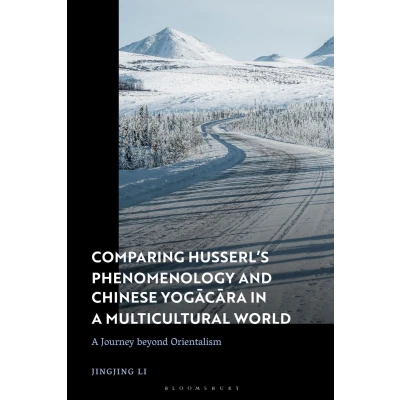
Comparing Husserl's Phenomenology and Chinese Yogacara in A Multicultural World: Journey Beyond Orientalism
Uitgelicht

|
34,99 |
Naar shop
|

|
38,35 |
Naar shop
|

|
38,35 |
Naar shop
|
| VERGELIJK ALLE AANBIEDERS (3) | ||
 Beschrijving
Bol
Brings Edmund Husserl’s phenomenology and Chinese Yogacara Buddhism into dialogue to explore their perceived incommensurable stances towards the concept of essence. How is constructive cultural exchange possible when traditions hold such contradictory views? Jingjing Li brings Edmund Husserl’s phenomenology and Chinese Yogacara Buddhism into dialogue to explore the concept of essence in this open access book.While phenomenology and Yogacara Buddhism are both known for their investigations of consciousness, there exists a core tension between them: phenomenology affirms the existence of essence, whereas Yogacara Buddhism argues that everything is empty of essence (svabhava). Answering this question and positioning both philosophical traditions in their respective intellectual and linguistic contexts, Li argues that what Husserl means by essence differs from what Chinese Yogacarins mean by svabhava. We see how Husserl problematises the substantialist understanding of essence in European philosophy. Detailing the process of finding a middle ground between the two traditions, Li's rich study demonstrates how both can thrive together in order to overcome Orientalism. She reveals that Chinese Yogacara has developed a distinct account of self-transformation, ethics and social ontology that renders it much more than simply a Buddhist version of Husserlian phenomenology.The ebook editions of this book are available open access under a CC BY-NC-ND 4.0 licence on bloomsburycollections.com. Open access was funded by the Dutch Research Council (NWO).


 Beschrijving
(2)
Beschrijving
(2)
Brings Edmund Husserl’s phenomenology and Chinese Yogacara Buddhism into dialogue to explore their perceived incommensurable stances towards the concept of essence. How is constructive cultural exchange possible when traditions hold such contradictory views? Jingjing Li brings Edmund Husserl’s phenomenology and Chinese Yogacara Buddhism into dialogue to explore the concept of essence in this open access book.While phenomenology and Yogacara Buddhism are both known for their investigations of consciousness, there exists a core tension between them: phenomenology affirms the existence of essence, whereas Yogacara Buddhism argues that everything is empty of essence (svabhava). Answering this question and positioning both philosophical traditions in their respective intellectual and linguistic contexts, Li argues that what Husserl means by essence differs from what Chinese Yogacarins mean by svabhava. We see how Husserl problematises the substantialist understanding of essence in European philosophy. Detailing the process of finding a middle ground between the two traditions, Li's rich study demonstrates how both can thrive together in order to overcome Orientalism. She reveals that Chinese Yogacara has developed a distinct account of self-transformation, ethics and social ontology that renders it much more than simply a Buddhist version of Husserlian phenomenology.The ebook editions of this book are available open access under a CC BY-NC-ND 4.0 licence on bloomsburycollections.com. Open access was funded by the Dutch Research Council (NWO).
AmazonPagina's: 272, Paperback, Bloomsbury Academic
 Productspecificaties
 Prijshistorie
* Prijshistorie bevat geen data van Amazon, Amazon Marketplace.
Prijzen voor het laatst bijgewerkt op:
 Gerelateerde resultaten


