
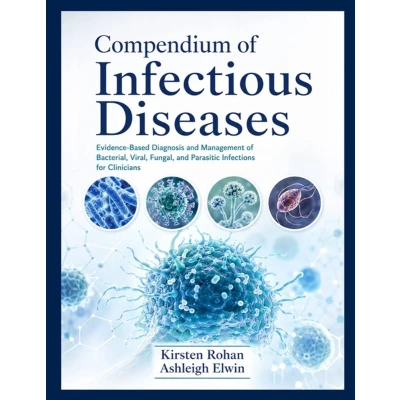
Compendium of Infectious Diseases: Evidence-Based Diagnosis and Management Bacterial, Viral, Fungal, Parasitic Infections for Clinicians
Uitgelicht

|
129,00 |
Naar shop
|

|
143,93 |
Naar shop
|

|
143,93 |
Naar shop
|
| VERGELIJK ALLE AANBIEDERS (3) | ||
 Beschrijving
Bol
Master the clinical reasoning behind infectious disease care-from pathogen biology and laboratory interpretation to antimicrobial selection, system-based management, and prevention. Compendium of Infectious Diseases is a comprehensive clinical reference designed for medical students, residents, fellows, hospitalists, and practicing clinicians who need a structured way to connect microbiology with bedside decision-making. Rather than presenting infectious diseases as isolated facts, the book moves logically from foundational microbiology and host immunity into diagnostic methods, antimicrobial pharmacology, fever and sepsis, organ-system syndromes, major pathogen groups, HIV, immunocompromised hosts, healthcare-associated infections, travel medicine, and public health. Inside, you will be able to: - Build stronger diagnostic reasoning by linking symptoms, host factors, exposure history, specimen selection, laboratory findings, and likely pathogens.- Interpret Gram stains, cultures, susceptibility reports, serology, PCR results, rapid panels, and emerging molecular diagnostics with greater confidence.- Compare antimicrobial classes, mechanisms, pharmacokinetics, pharmacodynamics, resistance pathways, de-escalation strategies, and stewardship principles.- Navigate respiratory, neurologic, cardiovascular, gastrointestinal, genitourinary, skin, musculoskeletal, ocular, and ENT infection syndromes through organized clinical frameworks.- Review bacterial, viral, fungal, parasitic, and opportunistic pathogens in a consistent format that supports both study and point-of-care reference.- Strengthen management planning for HIV, neutropenia, transplantation, antimicrobial resistance, outbreak response, and infection prevention.- Reinforce key concepts through clinical pearls, tables, algorithms, diagrams, and quick-reference sections. The text also addresses the practical questions that arise during clinical training and patient care: Which specimens should be collected first? How should a preliminary Gram stain change empiric coverage? When is de-escalation appropriate? Which immune defect predicts a particular pathogen pattern? How should travel exposure, device use, recent hospitalization, or immunosuppression alter the differential diagnosis? This resource is especially useful for readers who want one integrated reference instead of switching between separate microbiology, pharmacology, diagnostic, and internal medicine texts. Its broad coverage and clinically oriented organization make it suitable for coursework, clinical rotations, board review support, teaching preparation, and ongoing professional reference. Bring microbiology, diagnostics, therapeutics, and clinical reasoning together in one organized infectious disease resource.


 Beschrijving
(1)
Beschrijving
(1)
Master the clinical reasoning behind infectious disease care-from pathogen biology and laboratory interpretation to antimicrobial selection, system-based management, and prevention. Compendium of Infectious Diseases is a comprehensive clinical reference designed for medical students, residents, fellows, hospitalists, and practicing clinicians who need a structured way to connect microbiology with bedside decision-making. Rather than presenting infectious diseases as isolated facts, the book moves logically from foundational microbiology and host immunity into diagnostic methods, antimicrobial pharmacology, fever and sepsis, organ-system syndromes, major pathogen groups, HIV, immunocompromised hosts, healthcare-associated infections, travel medicine, and public health. Inside, you will be able to: - Build stronger diagnostic reasoning by linking symptoms, host factors, exposure history, specimen selection, laboratory findings, and likely pathogens.- Interpret Gram stains, cultures, susceptibility reports, serology, PCR results, rapid panels, and emerging molecular diagnostics with greater confidence.- Compare antimicrobial classes, mechanisms, pharmacokinetics, pharmacodynamics, resistance pathways, de-escalation strategies, and stewardship principles.- Navigate respiratory, neurologic, cardiovascular, gastrointestinal, genitourinary, skin, musculoskeletal, ocular, and ENT infection syndromes through organized clinical frameworks.- Review bacterial, viral, fungal, parasitic, and opportunistic pathogens in a consistent format that supports both study and point-of-care reference.- Strengthen management planning for HIV, neutropenia, transplantation, antimicrobial resistance, outbreak response, and infection prevention.- Reinforce key concepts through clinical pearls, tables, algorithms, diagrams, and quick-reference sections. The text also addresses the practical questions that arise during clinical training and patient care: Which specimens should be collected first? How should a preliminary Gram stain change empiric coverage? When is de-escalation appropriate? Which immune defect predicts a particular pathogen pattern? How should travel exposure, device use, recent hospitalization, or immunosuppression alter the differential diagnosis? This resource is especially useful for readers who want one integrated reference instead of switching between separate microbiology, pharmacology, diagnostic, and internal medicine texts. Its broad coverage and clinically oriented organization make it suitable for coursework, clinical rotations, board review support, teaching preparation, and ongoing professional reference. Bring microbiology, diagnostics, therapeutics, and clinical reasoning together in one organized infectious disease resource.
 Productspecificaties
 Prijshistorie
* Prijshistorie bevat geen data van Amazon, Amazon Marketplace.
Prijzen voor het laatst bijgewerkt op:
 Gerelateerde resultaten


