


€ 60,99 Gratis verzending

Gesponsorde links
|
|
60,99 |
Naar shop
|

|
71,92 |
Naar shop
|

|
71,92 |
Naar shop
|
| VERGELIJK ALLE AANBIEDERS (3) | ||
 Beschrijving
Vergelijk aanbieders (3)
Gesponsorde links · Sommige shops betalen ons een vergoeding
€ 60,99 Gratis verzending
€ 71,92 Gratis verzending
€ 71,92 Gratis verzending
Winkels met andere maten
Beschrijving
(1)
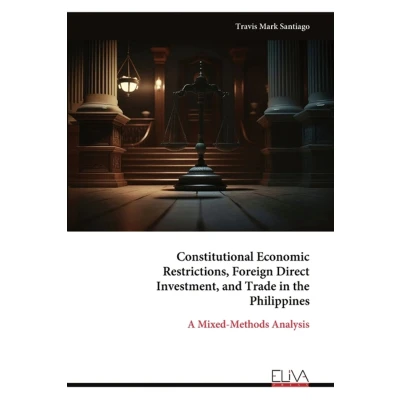
The research presents a comprehensive examination of the Philippine economic trajectory and its fundamental legal structures. Submitted for a Master in Business Administration at the University of Santo Tomas, this timely thesis explores how the 1987 Philippine Constitution impacts Foreign Direct Investment (FDI) and shapes the nation's overall economic performance. The research critically investigates the effects of long-standing protectionist policies-specifically the 60/40 equity law that limits foreign ownership-and evaluates whether these constitutional frameworks remain relevant in an era of globalization. By comparing the Philippines to its rapidly developing ASEAN-5 peers (Indonesia, Malaysia, Thailand, and Vietnam), the study illustrates how neighboring economies have successfully adapted their laws to attract international capital. Employing a robust mixed-methods research design, the study synthesizes structured cross-sector interviews, public surveys, and a descriptive-correlational analysis of World Bank data spanning from 1987 to 2023. The research reveals several compelling findings: There is a strong correlation between FDI inflows and international trade exports in the Philippines. A majority of survey respondents strongly agree that amending the current constitution should be the government's top priority. Respondents indicate that without constitutional reform, the Philippines cannot keep up with global trends. Findings suggest that constitutional reform would positively impact not just the economy, but political reforms as well.
 Prijshistorie
* Prijshistorie bevat geen data van Amazon, Amazon Marketplace.
Prijzen voor het laatst bijgewerkt op:
 Gerelateerde resultaten
 Productspecificaties


