

€ 66,35 Gratis verzending

Uitgelicht
|
|
66,35 |
Naar shop
|

|
66,35 |
Naar shop
|

|
66,99 |
Naar shop
|
| VERGELIJK ALLE AANBIEDERS (3) | ||
 Beschrijving
Vergelijk aanbieders (3)
€ 66,35 Gratis verzending
€ 66,35 Gratis verzending
€ 66,99 Gratis verzending
Winkels met andere maten
Beschrijving
(1)
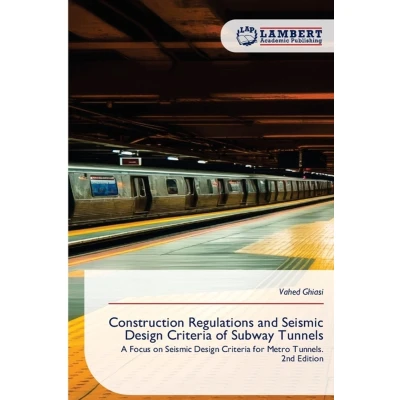
Construction of a tunnel involves a sequence of closely connected operations, including excavation, muck removal, temporary support, final lining, and finishing works. Tunnel performance largely depends on ground conditions, underground characteristics, and overburden loads. For economic, transportation, and communication purposes, tunnels are often constructed with large cross-sections using methods such as full-face excavation, shield tunneling, tunnel boring machines (TBM), the New Austrian Tunnelling Method (NATM), and cut-and-cover techniques. Urban development frequently requires the construction of shallow tunnels in soft soils, hard soils, or rock formations. Such construction can cause ground displacement, making monitoring before, during, and after construction essential for controlling structural stability. In all tunneling methods, overburden loads significantly affect the rock mass, altering the initial stress distribution. Therefore, knowledge of rock physical parameters is essential for tunnel designers and engineers.
 Prijshistorie
 * Prijshistorie bevat geen data van Amazon, Amazon Marketplace.
Prijzen voor het laatst bijgewerkt op:
 Gerelateerde resultaten
 Productspecificaties


