


€ 37,99 Gratis verzending

Uitgelicht
|
|
37,99 |
Naar shop
|
| VERGELIJK ALLE AANBIEDERS (1) | ||
 Beschrijving
Vergelijk aanbieders (1)
€ 37,99 Gratis verzending
Winkels met andere maten
Beschrijving
(1)
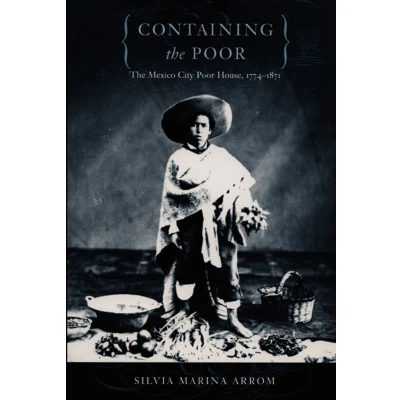
A social history of poverty in Mexico City, based on a study of a poorhouse designed to incarcerate and train "deserving" beggars to be productive and responsible citizens. In 1774 Mexico City leaders created the Mexico City Poor House-the centerpiece of a bold experiment intended to eliminate poverty and impose a new work ethic on former beggars by establishing a forcible internment policy for some and putting others to work. In Containing the Poor Silvia Marina Arrom tells the saga of this ill-fated plan, showing how the asylum functioned primarily to educate white orphans instead of suppressing mendicancy and exerting control over the multiracial community for whom it was designed. For a nation that had traditionally regarded the needy as having the undisputed right to receive alms and whose affluent citizens felt duty-bound to dispense them, the experiment was doomed from the start, explains Arrom. She uses deep archival research to reveal that-much to policymakers’ dismay-the Poor House became an orphanage largely because the government had underestimated the embeddedness of this moral economy of begging. While tracing the course of an eventful century that also saw colonialism give way to republicanism in Mexico, Arrom links the Poor House’s transformation with other societal factors as well, such as Mexican women’s increasing impact on social welfare policies. With poverty, begging, and homelessness still rampant in much of Latin America today, this study of changing approaches to social welfare will be particularly valuable to student and scholars of Mexican and Latin American society and history, as well as those engaged in the study of social and welfare policy.
 Productspecificaties
| EAN |
|
|---|---|
| Maat |
|
 Prijshistorie
 Prijzen voor het laatst bijgewerkt op:
 Gerelateerde resultaten


