


€ 29,99 Gratis verzending

Uitgelicht
|
|
29,99 |
Naar shop
|
| VERGELIJK ALLE AANBIEDERS (1) | ||
 Beschrijving
Vergelijk aanbieders (1)
€ 29,99 Gratis verzending
Winkels met andere maten
Beschrijving
(1)
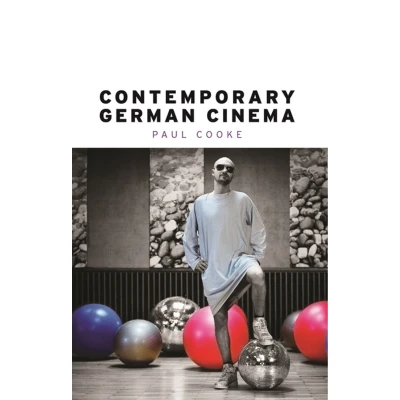
Contemporary German cinema is aimed at students of European and world cinema. It is wide-ranging, articulate and geared toward cinema and film studies. German film is enjoying enormous levels of success, whether success be defined in terms of financial returns, popularity with audiences at home and abroad or critical acclaim. The 2000s saw German productions become regular guests at all the major international film festivals, from Sundance to Tokyo, winning awards across the globe. As such, and as reviewers are keen to point out, the German industry appears to be reaching once again the aesthetic heights that brought it the international praise of critics from the late 1960s to the early 1980s. Contemporary German Cinema examines the success of recent film production in its wider industrial, cultural and political context, blending broad overviews of recent trends with detailed key case studies. It explores the German film funding system, then looks at the impact of this system on filmmakers’ aesthetic choices, be it the role of realism in contemporary cinema, or the rediscovery of the Heimatfilm as a popular film genre. This is complemented by discussion of the dominant issues these films explore, from the legacies of Germany’s Nazi past and post-war division, to the nation’s increasingly multicultural make up, as well as the nation’s shifting relationship with the United States as both a ‘real’ and ‘imagined’ space. Paul Cooke looks at many of the most successful films of the last two decades, including Tom Tykwer's Run Lola Run, Wolfgang Becker's Good Bye, Lenin!, Hans Weingartner's The Edukators, Florian Henckel von Donnersmarchks The Lives of Others and Oliver Hirschbiegel's Downfall. German film is enjoying enormous levels of success, be success defined in terms of financial returns, popularity with audiences at home and abroad or critical acclaim. On the one hand, the 2000s saw German productions become regular guests at all the major international film festivals, from Sundance to Tokyo, winning awards across the globe. As such, and as reviewers are keen to point out, the German industry appears to be reaching once again the aesthetic heights that brought it the international praise of critics from the late 1960s to the early 1980s. On the other, domestic productions are becoming more popular and, as a result, more commercially viable. Contemporary German Cinema examines the success of recent film production in its wider industrial, cultural and political context, blending broad overviews of recent trends with detailed examinations of key case studies. As a starting point, it explores the German film funding system and the economic place of the German industry within global film production. Subsequent chapters then look at the impact of this system on filmmakers’ aesthetic choices, be it the role of realism in contemporary cinema, or the rediscovery of the Heimatfilm as a popular film genre. This is complemented by discussion of the dominant issues these films explore, from the legacies of Germany’s Nazi past and post-war division, to the nation’s increasingly multicultural make up, the changing age and gender demographic of cinema audiences as well as the nation’s shifting relationship with the United States as both a ‘real’ and ‘imagined’ space. Paul Cooke looks at many of the most successful films of the last two decades, including Tom Tykwer's Run Lola Run, Wolfgang Becker's Good Bye, Lenin!, Hans Weingartner's The Edukators, Florian Henckel von Donnersmarchks The Lives of Others and Oliver Hirschbiegel's Downfall.
 Productspecificaties
| EAN |
|
|---|---|
| Maat |
|
 Prijshistorie
Prijzen voor het laatst bijgewerkt op:
 Gerelateerde resultaten


