

€ 83,05 € 3,14 verzendkosten Totaal € 86,19

Uitgelicht
|
|
83,05 |
Naar shop
|

|
92,80 |
Naar shop
|
| VERGELIJK ALLE AANBIEDERS (2) | ||
 Beschrijving
Vergelijk aanbieders (2)
€ 83,05 € 3,14 verzendkosten Totaal € 86,19
€ 92,80 Gratis verzending
Winkels met andere maten
Beschrijving
(1)
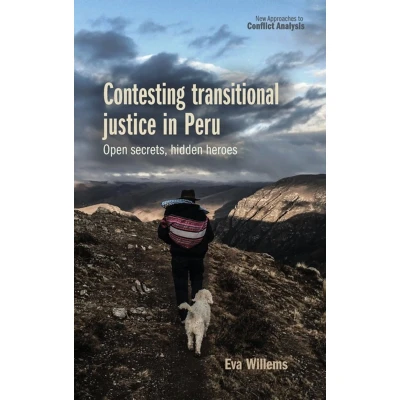
Contesting transitional justice in Peru analyses how the international transitional justice paradigm has shaped Peru’s reckoning with the internal armed conflict. Contesting transitional justice examines how the international paradigm of transitional justice has shaped Peru’s efforts to address the legacies of the internal armed conflict that ravaged the country between 1980 and 2000. Eva Willems presents an innovative conceptual framework that critically interrogates the tenets of transitional justice and unravels how the involvement of local, national and international actors shapes initiatives regarding memorialisation, truth-telling, reparations and exhumations of mass graves. Drawing on three in-depth empirical case studies from the Ayacucho region, the book analyses how survivors engage with these initiatives in function of their specific goals and (political) struggles.In understanding the actions and motivations of survivors both during and after the conflict, Willems moves beyond the victim–perpetrator binary by developing the concept of a multi-layered survivor identity to capture the complexity of (post-)conflict agency, including the involvement of armed civilians in wartime violence. Adopting a (meta-)historical approach to (post-)conflict studies, the book moreover critically examines the temporality of transitional justice and links survivors’ actions to a broader history of structural violence. Willems argues convincingly that survivors’ engagement with transitional justice is moulded by their pursuit of thicker citizenship, using the process of reckoning with the past to denounce ongoing injustices and raise expectations for the future. Contesting transitional justice grants essential insights into armed conflict and citizenship in Peru and offers novel perspectives for rethinking knowledge production in (post-)conflict settings. Contesting transitional justice in Peru explores how global ideas of transitional justice have shaped Peru’s response to the legacies of the internal armed conflict of 1980–2000. Critically interrogating the tenets of transitional justice and drawing on three in-depth case studies from Ayacucho, Eva Willems examines how survivors engage with initiatives regarding memorialisation, truth-telling, reparations and exhumations. Moving beyond the victim–perpetrator divide, she introduces the notion of a multi-layered survivor identity to capture the complex agency of civilians affected by and involved in wartime violence. Using a (meta-)historical lens, Willems reveals how survivors use transitional justice not only to confront the past but also to challenge ongoing structural injustices and claim thicker citizenship. Offering fresh insights into armed conflict and citizenship in Peru and beyond, Contesting transitional justice in Peru rethinks how survivors pursue justice and recognition and how knowledge about (post-)conflict societies is produced.
 Prijshistorie
 * Prijshistorie bevat geen data van Amazon.
Prijzen voor het laatst bijgewerkt op:
 Gerelateerde resultaten
 Productspecificaties


