








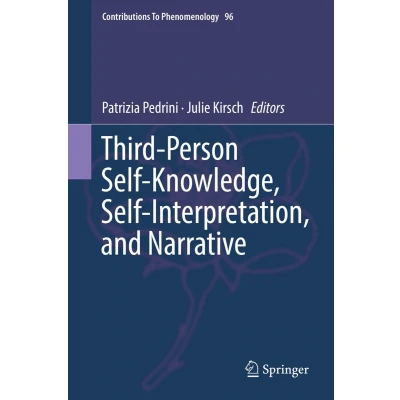
Contributions to Phenomenology Third Person Self Knowledge, Interpretation, and Narrative
Uitgelicht

|
116,99 |
Naar shop
|
 Beschrijving
Bol
This volume answers questions that lead to a clearer picture of third-person self- knowledge, the self-interpretation it embeds, and its narrative structure. This volume answers questions that lead to a clearer picture of third-person self- knowledge, the self-interpretation it embeds, and its narrative structure. Bringing together current research on third-person self-knowledge and self-interpretation, the book focuses on third-person self-knowledge, and the role that narrative and interpretation play in acquiring it. It regards the third-personal epistemic approach to oneself as a problem worthy of investigation in its own right, and makes clear the relation between third-person self-knowledge, self-interpretation, and narrative capacities. In recent years, the idea that each person is in a privileged position to acquire knowledge about her own mental states has come under attack. A growing body of empirical research has cast doubt upon the existence of what philosophers call ‘first person self-knowledge’, i.e., knowledge about our mental states that is often thought to be immediate, transparent, and authoritative. This line of thoughthas led some philosophers to claim that what seems to be ‘first-person self-knowledge’ is really just ‘third-person self-knowledge,’ i.e., knowledge about our mental states that is inferential, opaque, and fallible. This book discusses challenges for first-person knowledge and explores the true nature of third-person knowledge. This volume answers questions that lead to a clearer picture of third-person self- knowledge, the self-interpretation it embeds, and its narrative structure. Bringing together current research on third-person self-knowledge and self-interpretation, the book focuses on third-person self-knowledge, and the role that narrative and interpretation play in acquiring it. It regards the third-personal epistemic approach to oneself as a problem worthy of investigation in its own right, and makes clear the relation between third-person self-knowledge, self-interpretation, and narrative capacities. In recent years, the idea that each person is in a privileged position to acquire knowledge about her own mental states has come under attack. A growing body of empirical research has cast doubt upon the existence of what philosophers call ‘first person self-knowledge’, i.e., knowledge about our mental states that is often thought to be immediate, transparent, and authoritative. Thisline of thought has led some philosophers to claim that what seems to be ‘first-person self-knowledge’ is really just ‘third-person self-knowledge,’ i.e., knowledge about our mental states that is inferential, opaque, and fallible. This book discusses challenges for first-person knowledge and explores the true nature of third-person knowledge.


Vergelijk aanbieders (1)

 Beschrijving
(1)
Beschrijving
(1)
This volume answers questions that lead to a clearer picture of third-person self- knowledge, the self-interpretation it embeds, and its narrative structure. This volume answers questions that lead to a clearer picture of third-person self- knowledge, the self-interpretation it embeds, and its narrative structure. Bringing together current research on third-person self-knowledge and self-interpretation, the book focuses on third-person self-knowledge, and the role that narrative and interpretation play in acquiring it. It regards the third-personal epistemic approach to oneself as a problem worthy of investigation in its own right, and makes clear the relation between third-person self-knowledge, self-interpretation, and narrative capacities. In recent years, the idea that each person is in a privileged position to acquire knowledge about her own mental states has come under attack. A growing body of empirical research has cast doubt upon the existence of what philosophers call ‘first person self-knowledge’, i.e., knowledge about our mental states that is often thought to be immediate, transparent, and authoritative. This line of thoughthas led some philosophers to claim that what seems to be ‘first-person self-knowledge’ is really just ‘third-person self-knowledge,’ i.e., knowledge about our mental states that is inferential, opaque, and fallible. This book discusses challenges for first-person knowledge and explores the true nature of third-person knowledge. This volume answers questions that lead to a clearer picture of third-person self- knowledge, the self-interpretation it embeds, and its narrative structure. Bringing together current research on third-person self-knowledge and self-interpretation, the book focuses on third-person self-knowledge, and the role that narrative and interpretation play in acquiring it. It regards the third-personal epistemic approach to oneself as a problem worthy of investigation in its own right, and makes clear the relation between third-person self-knowledge, self-interpretation, and narrative capacities. In recent years, the idea that each person is in a privileged position to acquire knowledge about her own mental states has come under attack. A growing body of empirical research has cast doubt upon the existence of what philosophers call ‘first person self-knowledge’, i.e., knowledge about our mental states that is often thought to be immediate, transparent, and authoritative. Thisline of thought has led some philosophers to claim that what seems to be ‘first-person self-knowledge’ is really just ‘third-person self-knowledge,’ i.e., knowledge about our mental states that is inferential, opaque, and fallible. This book discusses challenges for first-person knowledge and explores the true nature of third-person knowledge.
 Productspecificaties
| EAN |
|
|---|---|
| Maat |
|
 Prijshistorie
Prijzen voor het laatst bijgewerkt op:
 Gerelateerde resultaten


