
Cultural Memory in the Present Political and Aesthetics of Care
Uitgelicht

|
25,99 |
Naar shop
|

|
102,00
97,64 |
Naar shop
|
| VERGELIJK ALLE AANBIEDERS (2) | ||
 Beschrijving
Bol Partner
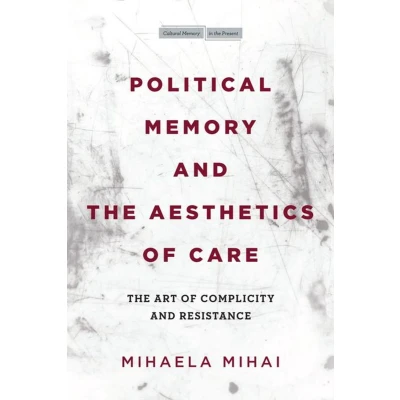
With this nuanced and interdisciplinary work, political theorist Mihaela Mihai tackles several interrelated questions: How do societies remember histories of systemic violence? Who is excluded from such histories' cast of characters? And what are the political costs of selective remembering in the present? Building on insights from political theory, social epistemology, and feminist and critical race theory, Mihai argues that a double erasure often structures hegemonic narratives of complex violence: of widespread, heterogeneous complicity and of "impure" resistances, not easily subsumed to exceptionalist heroic models. In dialogue with care ethicists and philosophers of art, she then suggests that such narrative reductionism can be disrupted aesthetically through practices of "mnemonic care," that is, through the hermeneutical labor that critical artists deliver—thematically and formally—within communities' space of meaning. Empirically, the book examines both consecrated and marginalized artists who tackled the memory of Vichy France, communist Romania, and apartheid South Africa. Despite their specificities, these contexts present us with an opportunity to analyze similar mnemonic dynamics and to recognize the political impact of dissenting artistic production. Crossing disciplinary boundaries, the book intervenes in debates over collective responsibility, historical injustice, and the aesthetics of violence within political theory, memory studies, social epistemology, and transitional justice.


 Beschrijving
(1)
Beschrijving
(1)
With this nuanced and interdisciplinary work, political theorist Mihaela Mihai tackles several interrelated questions: How do societies remember histories of systemic violence? Who is excluded from such histories' cast of characters? And what are the political costs of selective remembering in the present? Building on insights from political theory, social epistemology, and feminist and critical race theory, Mihai argues that a double erasure often structures hegemonic narratives of complex violence: of widespread, heterogeneous complicity and of "impure" resistances, not easily subsumed to exceptionalist heroic models. In dialogue with care ethicists and philosophers of art, she then suggests that such narrative reductionism can be disrupted aesthetically through practices of "mnemonic care," that is, through the hermeneutical labor that critical artists deliver—thematically and formally—within communities' space of meaning. Empirically, the book examines both consecrated and marginalized artists who tackled the memory of Vichy France, communist Romania, and apartheid South Africa. Despite their specificities, these contexts present us with an opportunity to analyze similar mnemonic dynamics and to recognize the political impact of dissenting artistic production. Crossing disciplinary boundaries, the book intervenes in debates over collective responsibility, historical injustice, and the aesthetics of violence within political theory, memory studies, social epistemology, and transitional justice.
 Productspecificaties
| EAN |
|
|---|---|
| Maat |
|
 Prijshistorie
Prijzen voor het laatst bijgewerkt op:
 Gerelateerde resultaten


