


€ 189,83 Gratis verzending

Uitgelicht
|
|
189,83 |
Naar shop
|

|
277,99 |
Naar shop
|
| VERGELIJK ALLE AANBIEDERS (2) | ||
 Beschrijving
Vergelijk aanbieders (2)
€ 189,83 Gratis verzending
€ 277,99 Gratis verzending
Winkels met andere maten
Beschrijving
(1)
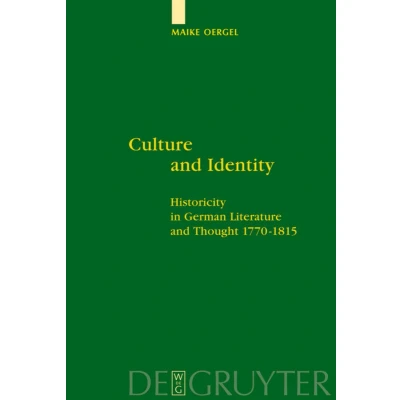
Examines the impact of the awareness of historicity on the concepts of modernity, identity, and culture as they developed in German thought around 1800. This work shows how this awareness determined the German notion of the priority of cultural identity. It traces the modification of the Enlightenment concepts of perfectibility. This interdisciplinary study examines the impact of the emerging awareness of historicity on the concepts of modernity, identity, and culture as they developed in German thought around 1800. It shows how this awareness determined the German notion of the priority of cultural identity. Key texts from Sturm und Drang, Weimar Classicism, German Romanticism and German Idealism, including Goethe’s Faust I and Wilhelm Meisters Lehrjahre, are contextualised in relation to post-Enlightenment debates on historicity and modernity. The study traces the modification of the Enlightenment concepts of perfectibility and universal ideals to accommodate the new notion of temporal particularity and impermanence. This is achieved by embedding these once static concepts in a historical process that is powered by a self-prompting internal dialectic. Through synthetic absorption within the historical succession the dialectical process allows for the continuity of values, while leaving room for discontinuity and difference by relying on oppositional successions. The study reveals close connections between the intellectual concerns, the literary ambitions, and the endeavours to construct a modern German identity during this period, which suggests a far greater intellectual coherence of the Goethezeit regarding intellectual challenges and objectives than has been previously assumed.
 Productspecificaties
| EAN |
|
|---|---|
| Maat |
|
 Prijshistorie
Prijzen voor het laatst bijgewerkt op:
 Gerelateerde resultaten


