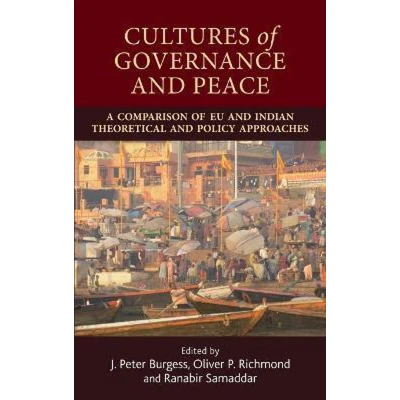

Cultures of governance and peace

Prijzen vanaf
62,83

Uitgelicht

VERGELIJK ALLE AANBIEDERS (2)

Beschrijving

Bol Partner This volume brings together insights which look at the intersection of governance, culture and conflict resolution in India and the European Union. Cultures of governance and peace assembles a range of critical insights on the intersection of governance, culture and conflict resolution in India and the EU. These two epistemic, cultural and institutional settings, though strikingly different in many ways, have recently been brought closer together by the ideas and practices of what are known as liberal peace and the neoliberal state, as well as associated development projects. While the differences between India and the EU are obvious in terms of geography, culture and the nature and shape of institutions and historical forces, the commonalities are surprising. This is best reflected in their light critiques of neoliberalism, their conceptual relationships with governmentality, their focus on decentralised institutions and local forms of peace agency, the escalatory tendencies of borders and centralising government, and the urgency of development and self-determination pressures. This is the first book to compare contemporary Indian and EU approaches to peace. Based on a range of case studies that examine these themes in the context of the practices of conflict resolution, it provides an overview of governance issues vis-à-vis the search for peace at local and state or regional levels, highlighting the increasing number of perspectives from within 'emerging' countries. Postgraduate students, peace and conflict researchers, and policy-makers and practitioners will benefit immensely from the insights provided in this book. This volume brings together insights which look at the intersection of governance, culture and conflict resolution in India and the European Union. Two very different but connected epistemic, cultural and institutional settings, which have been divided by distance, colonialism and culture; yet have recently been brought closer together by ideas and practices of what is known as liberal peace, neoliberal state and development projects. The differences are obvious in terms of geography, culture, the nature and shape of institutions, and historical forces: and yet the commonalities between the two are surprising. This is the first book to compare contemporary Indian and European Union approaches to peace and is based on strong case studies and rigorous analysis. Postgraduate students, peace and conflict researchers, policy-makers and practitioners will benefit immensely from insights provided in this book.

Vergelijk aanbieders (2)

Shop
Prijs
Verzendkosten
Totale prijs
62,83
gebruikt
Gratis
62,83
Naar shop
Gratis Shipping Costs
83,99
Gratis
83,99
Naar shop
Gratis Shipping Costs
Beschrijving (2)
Bol Partner

This volume brings together insights which look at the intersection of governance, culture and conflict resolution in India and the European Union. Cultures of governance and peace assembles a range of critical insights on the intersection of governance, culture and conflict resolution in India and the EU. These two epistemic, cultural and institutional settings, though strikingly different in many ways, have recently been brought closer together by the ideas and practices of what are known as liberal peace and the neoliberal state, as well as associated development projects. While the differences between India and the EU are obvious in terms of geography, culture and the nature and shape of institutions and historical forces, the commonalities are surprising. This is best reflected in their light critiques of neoliberalism, their conceptual relationships with governmentality, their focus on decentralised institutions and local forms of peace agency, the escalatory tendencies of borders and centralising government, and the urgency of development and self-determination pressures. This is the first book to compare contemporary Indian and EU approaches to peace. Based on a range of case studies that examine these themes in the context of the practices of conflict resolution, it provides an overview of governance issues vis-à-vis the search for peace at local and state or regional levels, highlighting the increasing number of perspectives from within 'emerging' countries. Postgraduate students, peace and conflict researchers, and policy-makers and practitioners will benefit immensely from the insights provided in this book. This volume brings together insights which look at the intersection of governance, culture and conflict resolution in India and the European Union. Two very different but connected epistemic, cultural and institutional settings, which have been divided by distance, colonialism and culture; yet have recently been brought closer together by ideas and practices of what is known as liberal peace, neoliberal state and development projects. The differences are obvious in terms of geography, culture, the nature and shape of institutions, and historical forces: and yet the commonalities between the two are surprising. This is the first book to compare contemporary Indian and European Union approaches to peace and is based on strong case studies and rigorous analysis. Postgraduate students, peace and conflict researchers, policy-makers and practitioners will benefit immensely from insights provided in this book.

Bol

This volume brings together insights which look at the intersection of governance, culture and conflict resolution in India and the European Union. Two very different but connected epistemic, cultural and institutional settings, which have been divided by distance, colonialism and culture; yet have recently been brought closer together by ideas and practices of what is known as liberal peace, neoliberal state and development projects. The differences are obvious in terms of geography, culture, the nature and shape of institutions, and historical forces: and yet the commonalities between the two are surprising. This is the first book to compare contemporary Indian and European Union approaches to peace and is based on strong case studies and rigorous analysis. Postgraduate students, peace and conflict researchers, policy-makers and practitioners will benefit immensely from insights provided in this book.


Productspecificaties

EAN
  • 9780719099557
  • 9781526117595
Maat


Prijshistorie

Prijzen voor het laatst bijgewerkt op:

Uitgelichte Keuze
62,83
Naar shop
