

€ 49,81 Gratis verzending

Uitgelicht
|
|
49,81 |
Naar shop
|

|
49,81 |
Naar shop
|

|
66,99 |
Naar shop
|
| VERGELIJK ALLE AANBIEDERS (3) | ||
 Beschrijving
Vergelijk aanbieders (3)
€ 49,81 Gratis verzending
€ 49,81 Gratis verzending
€ 66,99 Gratis verzending
Winkels met andere maten
Beschrijving
(1)
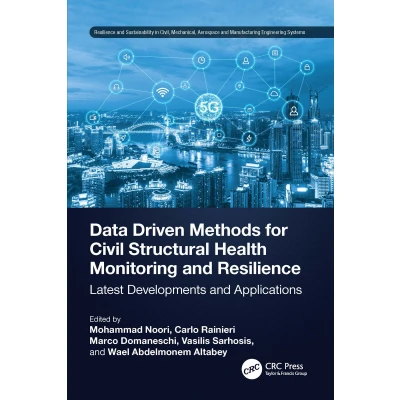
Data Driven Methods for Civil Structural Health Monitoring and Resilience: Latest Developments and Applications provides an overview of data-driven methods for structural health monitoring (SHM) and resilience of civil engineering structures, mostly based on artificial intelligence or other advanced data science techniques. Data Driven Methods for Civil Structural Health Monitoring and Resilience: Latest Developments and Applications provides a comprehensive overview of data-driven methods for structural health monitoring (SHM) and resilience of civil engineering structures, mostly based on artificial intelligence or other advanced data science techniques. This allows existing structures to be turned into smart structures, thereby allowing them to provide intelligible information about their state of health and performance on a continuous, relatively real-time basis. Artificial-intelligence-based methodologies are becoming increasingly more attractive for civil engineering and SHM applications; machine learning and deep learning methods can be applied and further developed to transform the available data into valuable information for engineers and decision makers.
 Prijshistorie
 * Prijshistorie bevat geen data van Amazon, Amazon Marketplace.
Prijzen voor het laatst bijgewerkt op:
 Gerelateerde resultaten
 Productspecificaties


