

€ 23,15 Gratis verzending

Uitgelicht
|
|
23,15 |
Naar shop
|

|
23,15 |
Naar shop
|

|
24,99 |
Naar shop
|
| VERGELIJK ALLE AANBIEDERS (3) | ||
 Beschrijving
Vergelijk aanbieders (3)
€ 23,15 Gratis verzending
€ 23,15 Gratis verzending
€ 24,99 € 2,99 verzendkosten Totaal € 27,98
Winkels met andere maten
Beschrijving
(1)
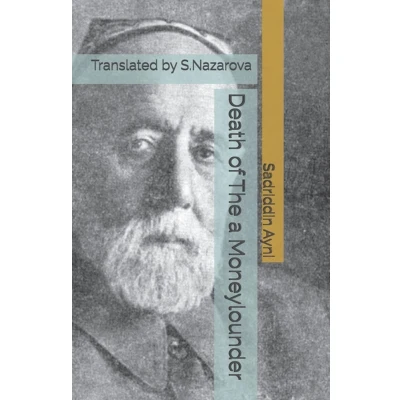
Sadriddin Ayni (1878-1954), born Sadriddin Saidmurodzoda in the village of Soktare (near Bukhara, then in the Emirate of Bukhara under Russian protectorate), is widely regarded as the founder of modern Tajik literature and Tajikistan's national poet. Orphaned at age 12, he moved to Bukhara, studied in a madrasa, and became involved in the Jadid reform movement. He supported the Bolshevik Revolution, survived imprisonment and the Stalinist purges, and later held prominent roles, including as the first president of the Tajik SSR Academy of Sciences (1951-1954). Ayni wrote in Tajik and Uzbek, producing poetry, fiction, journalism, history, memoirs, and linguistic works. He survived the Soviet era's repressions and received multiple honors, including the Order of Lenin.His novella Margi Sudkhur ("Death of the Usurer," also translated as "The Death of the Moneylender" or "Marg-e sud-khor"), published in 1939 (with later revisions), is considered one of his mature masterpieces. Set in pre-revolutionary Bukhara, it follows the greedy, hypocritical moneylender Qori Ishkamba (nicknamed for his enormous belly), who exploits the poor through usury while posing as pious. The story uses sharp psychological analysis and satire to depict feudal corruption and social injustice. The usurer's sudden death upon hearing of the Bolsheviks' seizure of power symbolizes the collapse of the old oppressive system under the revolution. The work aligns with socialist realism, critiquing exploitation while portraying Soviet change positively.
 Prijshistorie
 * Prijshistorie bevat geen data van Amazon, Amazon Marketplace.
Prijzen voor het laatst bijgewerkt op:
 Gerelateerde resultaten
 Productspecificaties


