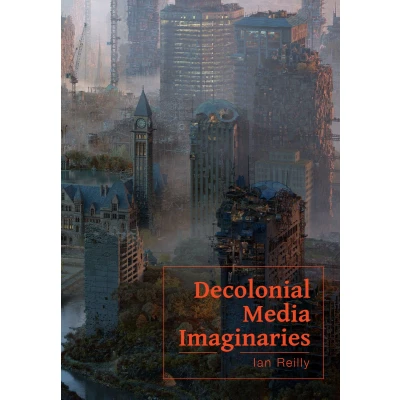


€ 96,13 Gratis verzending

Uitgelicht
|
|
96,13 |
Naar shop
|

|
96,13 |
Naar shop
|

|
98,99 |
Naar shop
|
| VERGELIJK ALLE AANBIEDERS (3) | ||
 Beschrijving
Vergelijk aanbieders (3)
€ 96,13 Gratis verzending
€ 96,13 Gratis verzending
€ 98,99 Gratis verzending
Winkels met andere maten
Beschrijving
(1)
A bold inquiry into media imaginaries and imaginaries-work as tools of decolonial resistance, worldmaking, and collective futurity. Decolonial Media Imaginaries (DMI) begins from the basic premise that imaginaries play a crucial role in articulating and elaborating identity, community, and solidarity—particularly through their function in the collaborative shaping of ways of life and living. Historically, however, such imaginaries have been structured by the imperatives of colonialism, capitalism, and global neoliberal expansion. Through the prism of contemporary decolonial politics, the book aims to decentre enduring imaginaries rooted in colonial, capitalist, and neoliberal fantasies about what constitutes the good life, in favour of centring decolonial imaginaries that redraw the lines of possibility surrounding emancipatory futures for human and more-than-human worlds. DMI presents a concise overview of the terrain prepared by decolonial thinkers to foreground the strategies, tools, tactics, and praxis that may be useful in bringing decolonial futures more closely within reach. This wide-ranging work explores ideas surrounding spectacle and display, corporatized technological fantasy, energy infrastructure, community-centred storytelling, pedagogical reparations, artworld decolonial praxis, and Black and Indigenous media futures. The book offers a speculative yet theoretically engaged discussion of how imaginaries-work contributes to a vital redrawing of shared futures grounded in justice, relationality, and collective flourishing. Ian Reilly is an Associate Professor in the Department of Communication Studies at Mount Saint Vincent University in K’jipuktuk, Mi’kma’ki, the unceded, unsurrendered, and ancestral territory of the Mi’kmaq people. A bold inquiry into media imaginaries and imaginaries-work as tools of decolonial resistance, worldmaking, and collective futurity. Decolonial Media Imaginaries (DMI) begins from the basic premise that imaginaries play a crucial role in articulating and elaborating identity, community, and solidarity—particularly through their function in the collaborative shaping of ways of life and living. Historically, however, such imaginaries have been structured by the imperatives of colonialism, capitalism, and global neoliberal expansion. Through the prism of contemporary decolonial politics, the book aims to decentre enduring imaginaries rooted in colonial, capitalist, and neoliberal fantasies about what constitutes the good life, in favour of centring decolonial imaginaries that redraw the lines of possibility surrounding emancipatory futures for human and more-than-human worlds. DMI presents a concise overview of the terrain prepared by decolonial thinkers (broadly conceived) to foreground the strategies, tools, tactics, and praxis that may be useful in bringing decolonial futures more closely within reach. This wide-ranging work explores ideas surrounding spectacle and display, corporatized technological fantasy, energy infrastructure, community-centred storytelling, pedagogical reparations, artworld decolonial praxis, and Black and Indigenous media futures. The book offers a speculative yet theoretically engaged discussion of how imaginaries-work contributes to a vital redrawing of shared futures grounded in justice, relationality, and collective flourishing.
 Prijshistorie
 * Prijshistorie bevat geen data van Amazon, Amazon Marketplace.
Prijzen voor het laatst bijgewerkt op:
 Gerelateerde resultaten
 Productspecificaties


