
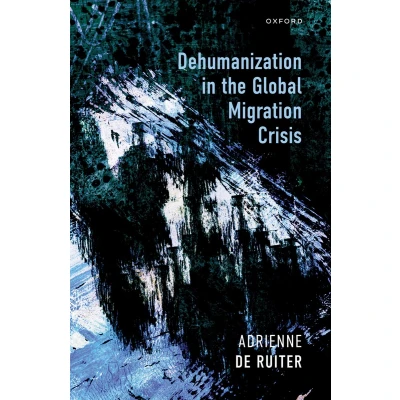
Dehumanization in the Global Migration Crisis
Uitgelicht

|
105,00 |
Naar shop
|
| VERGELIJK ALLE AANBIEDERS (1) | ||
 Beschrijving
Bol
Drawing from interviews with refugees and asylum seekers, Dehumanization in the Global Migration Crisis presents a philosophical, yet empirically grounded account of what dehumanization entails. What does it mean to fail to recognise people's humanity? This book analyses dehumanization in the global migration crisis to answer this complex question. Drawing from interviews with refugees and asylum seekers, Dehumanization in the Global Migration Crisis presents a philosophical, yet empirically grounded account of what dehumanization entails. While dehumanization is commonly used as a key concept in scholarship, popular media, and public debate to call attention to remediable harms faced by the forcibly displaced, its precise meaning is far from clear. A wide variety of practices is called dehumanizing, ranging from international policies that confine people under undignified circumstances within refugee camps to using (forced) migrants as bargaining chips in political negotiations. Yet, (how) do these practices exactly deny the humanity of the persons involved? What sense of humanity is at stake in the adversities that refugees, asylum seekers, and unwanted migrants face? Through a detailed examination of victims' descriptions of their lived experiences with dehumanization, animalization, objectification, and brutalization, De Ruiter finds that dehumanisation is best understood as a distinct form of moral exclusion that is characterised by blindness to the significance of their human subjectivity. The book provides a critical discourse analysis of the usage of the term dehumanization in reporting on the global migration crisis, and sets out what should be done to counteract the dehumanization of refugees, asylum seekers, and unwanted migrants.


Vergelijk aanbieders (1)

 Beschrijving
(1)
Beschrijving
(1)
Drawing from interviews with refugees and asylum seekers, Dehumanization in the Global Migration Crisis presents a philosophical, yet empirically grounded account of what dehumanization entails. What does it mean to fail to recognise people's humanity? This book analyses dehumanization in the global migration crisis to answer this complex question. Drawing from interviews with refugees and asylum seekers, Dehumanization in the Global Migration Crisis presents a philosophical, yet empirically grounded account of what dehumanization entails. While dehumanization is commonly used as a key concept in scholarship, popular media, and public debate to call attention to remediable harms faced by the forcibly displaced, its precise meaning is far from clear. A wide variety of practices is called dehumanizing, ranging from international policies that confine people under undignified circumstances within refugee camps to using (forced) migrants as bargaining chips in political negotiations. Yet, (how) do these practices exactly deny the humanity of the persons involved? What sense of humanity is at stake in the adversities that refugees, asylum seekers, and unwanted migrants face? Through a detailed examination of victims' descriptions of their lived experiences with dehumanization, animalization, objectification, and brutalization, De Ruiter finds that dehumanisation is best understood as a distinct form of moral exclusion that is characterised by blindness to the significance of their human subjectivity. The book provides a critical discourse analysis of the usage of the term dehumanization in reporting on the global migration crisis, and sets out what should be done to counteract the dehumanization of refugees, asylum seekers, and unwanted migrants.
 Productspecificaties
| EAN |
|
|---|---|
| Maat |
|
 Prijshistorie
Prijzen voor het laatst bijgewerkt op:
 Gerelateerde resultaten


