
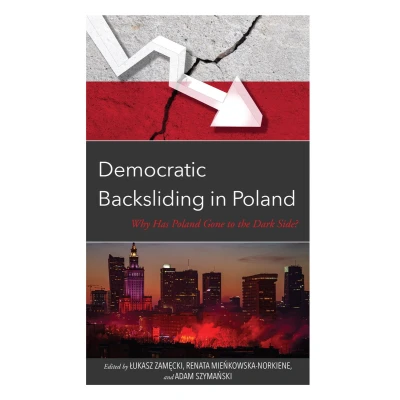
Democratic Backsliding in Poland
Uitgelicht

|
93,99 |
Naar shop
|
| VERGELIJK ALLE AANBIEDERS (1) | ||
 Beschrijving
Bol
The book provides analysis of causes of democratic backsliding in Poland. The authors propose to take a closer look at historical and identity aspects, economic factors, social and political polarization, institutions, parties and role of external factors (e.g. European Union) – as issues strongly contributing to this process. According to various independent research institutions Poland is now seen as the fastest destabilizing democracy. After 1989, Poland was often presented in the international public discourse as an example of the successful political and economic transition away from Communism. However, since 2015, Poland has been associated with terminologies not previously linked with this country: “nationalism”, “populism” or “breaking rule of law”. The authors of the book analyze the reasons for democratic backsliding in Poland in a more comprehensive and systematic manner. Special attention is paid to political polarization, which is a substantial threat to democracy. This volume shows the de-democratization of Poland from various perspectives, cultural and historical, political institutions, party politics, and media. Can the liberal model of of democracy remain intact with Poland, and what role does the EU play in all of this?. The book should be an required reading not only for scholars and students studying democratic decline, but also for everybody who wants to understand what is happening currently in Poland.


Vergelijk aanbieders (1)

 Beschrijving
(1)
Beschrijving
(1)
The book provides analysis of causes of democratic backsliding in Poland. The authors propose to take a closer look at historical and identity aspects, economic factors, social and political polarization, institutions, parties and role of external factors (e.g. European Union) – as issues strongly contributing to this process. According to various independent research institutions Poland is now seen as the fastest destabilizing democracy. After 1989, Poland was often presented in the international public discourse as an example of the successful political and economic transition away from Communism. However, since 2015, Poland has been associated with terminologies not previously linked with this country: “nationalism”, “populism” or “breaking rule of law”. The authors of the book analyze the reasons for democratic backsliding in Poland in a more comprehensive and systematic manner. Special attention is paid to political polarization, which is a substantial threat to democracy. This volume shows the de-democratization of Poland from various perspectives, cultural and historical, political institutions, party politics, and media. Can the liberal model of of democracy remain intact with Poland, and what role does the EU play in all of this?. The book should be an required reading not only for scholars and students studying democratic decline, but also for everybody who wants to understand what is happening currently in Poland.
 Productspecificaties
| EAN |
|
|---|---|
| Maat |
|
 Prijshistorie
Prijzen voor het laatst bijgewerkt op:
 Gerelateerde resultaten


