

€ 9,62 Gratis verzending

Uitgelicht
|
|
9,62 |
Naar shop
|

|
10,50 |
Naar shop
|
| VERGELIJK ALLE AANBIEDERS (2) | ||
 Beschrijving
Vergelijk aanbieders (2)
€ 9,62 Gratis verzending
€ 10,50 € 2,99 verzendkosten Totaal € 13,49
Winkels met andere maten
Beschrijving
(1)
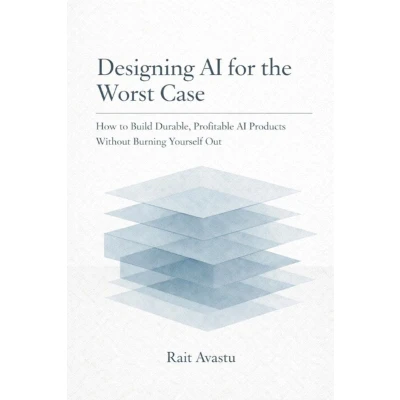
Designing AI for the Worst Case How to Build Durable, Profitable AI Products Without Burning Yourself OutMost AI products don't fail dramatically. They fail quietly.Margins erode as usage grows. Model updates shift behavior. Costs compound invisibly. Features that felt harmless at launch become dangerous at scale.The problem isn't the technology. It's the assumptions.Designing AI for the Worst Case is a practical framework for builders who want to create AI-powered products that survive real-world usage - financially, technically, and psychologically.Instead of chasing hype or rapid feature expansion, this book teaches you how to: - Avoid thin "GPT wrapper" traps- Treat AI as a dependency, not a feature- Design around token economics and worst-case usage- Build pricing models that don't collapse under success- Handle model drift and price volatility without panic- Layer AI onto strong local systems for resilience- Concentrate intelligence where it creates leverage- Align architecture with long-term sanityThis is not a book about prompt engineering tricks. It is a book about structural thinking.You'll learn how to model ceilings instead of averages, how to design for heavy usage before it arrives, and how to build systems that degrade gracefully instead of breaking under pressure.Because in AI products, success amplifies everything - especially mistakes.If you are building an AI SaaS, leading a technical team, or designing products powered by generative models, this book will help you create systems that remain profitable, predictable, and sustainable as they scale.Durability is not slower. It is stronger.And calm, in volatile markets, is a competitive advantage.
 Prijshistorie
 * Prijshistorie bevat geen data van Amazon.
Prijzen voor het laatst bijgewerkt op:
 Gerelateerde resultaten
 Productspecificaties


