


€ 42,99 Gratis verzending

Uitgelicht
|
|
42,99 |
Naar shop
|

|
46,25 |
Naar shop
|
| VERGELIJK ALLE AANBIEDERS (2) | ||
 Beschrijving
Vergelijk aanbieders (2)
€ 42,99 Gratis verzending
€ 46,25 Gratis verzending
Winkels met andere maten
Beschrijving
(1)
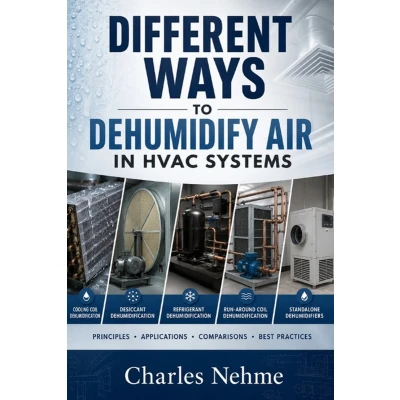
Humidity control is one of the most important yet often misunderstood aspects of heating, ventilation, and air-conditioning (HVAC) engineering. While temperature receives much of the attention in building design and operation, moisture management plays an equally critical role in occupant comfort, indoor air quality, energy efficiency, equipment reliability, and the protection of building assets.Excess humidity can lead to mold growth, microbial contamination, corrosion, condensation, material degradation, and process failures. Insufficient humidity can create discomfort, static electricity issues, product quality problems, and health concerns. Whether in residential buildings, offices, hospitals, data centers, pharmaceutical facilities, museums, laboratories, or industrial plants, proper humidity control is essential for achieving desired environmental conditions.Over the years, HVAC professionals have developed numerous methods to remove moisture from the air. Traditional cooling-based dehumidification remains the most widely used approach, but modern systems increasingly incorporate advanced technologies such as desiccant wheels, liquid desiccants, membrane systems, heat recovery devices, and hybrid solutions. The selection of the most appropriate dehumidification strategy depends on climate conditions, energy considerations, application requirements, and operational objectives.This book was written to provide a comprehensive overview of the many methods available for dehumidifying air within HVAC systems. It combines fundamental principles with practical engineering applications, helping readers understand not only how these technologies work but also when and why they should be used.The objective is to bridge the gap between theory and practice by presenting dehumidification concepts in a clear and structured manner. Readers will gain insights into psychrometrics, moisture control strategies, equipment selection, system integration, energy-efficient design, and emerging technologies shaping the future of HVAC.Whether you are designing a new facility, optimizing an existing system, troubleshooting humidity-related problems, or simply seeking a deeper understanding of air treatment processes, this book serves as a practical reference and educational resource.Humidity control is no longer a secondary consideration-it is a primary requirement for modern buildings and industrial processes. It is my hope that this book contributes to the advancement of knowledge and helps HVAC professionals design more efficient, reliable, and sustainable systems.Charles Nehme
 Prijshistorie
 * Prijshistorie bevat geen data van Amazon.
Prijzen voor het laatst bijgewerkt op:
 Gerelateerde resultaten
 Productspecificaties


