


€ 129,00 Gratis verzending

Uitgelicht
|
|
129,00 |
Naar shop
|

|
139,26 |
Naar shop
|

|
139,26 |
Naar shop
|
| VERGELIJK ALLE AANBIEDERS (3) | ||
 Beschrijving
Vergelijk aanbieders (3)
€ 129,00 Gratis verzending
€ 139,26 Gratis verzending
€ 139,26 Gratis verzending
Winkels met andere maten
Beschrijving
(1)
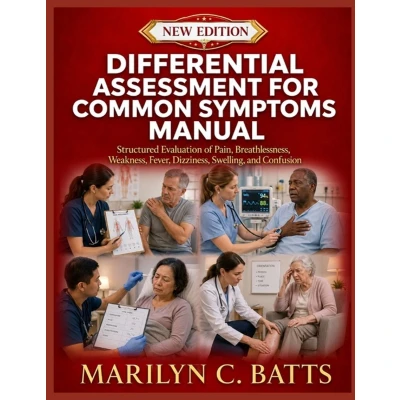
Build safer, sharper clinical reasoning one symptom at a time.A patient reports pain, breathlessness, weakness, fever, dizziness, swelling, or confusion. What should be assessed first? Which findings demand immediate escalation? How can common, urgent, and easily overlooked causes be organized without losing sight of the whole patient?Differential Assessment for Common Symptoms Textbook provides a structured, clinically focused approach to evaluating the symptoms encountered most often in patient care.Written by Marilyn C. Batts, this comprehensive textbook guides readers from the initial symptom report through focused history-taking, physical examination, differential reasoning, targeted testing, reassessment, documentation, escalation, and disposition planning.Inside, readers will learn how to: Distinguish urgent instability from nonemergency presentationsClarify vague or overlapping symptom descriptionsBuild prioritized differential assessmentsRecognize red flags and time-sensitive emergenciesInterpret vital signs, examination findings, and clinical trendsSelect focused bedside measurements and diagnostic testsAssess pain, breathlessness, weakness, fever, dizziness, edema, and confusionEvaluate atypical presentations in children, pregnant patients, older adults, and immunocompromised patientsManage symptom clusters that may reflect multisystem illnessDocument uncertainty and communicate concerns clearlyPerform safe handoffs, transfers, and escalationApply structured reasoning to complex clinical casesEach chapter combines practical frameworks, comparison tables, clinical safety guidance, integrated cases, review questions, answer explanations, and a detailed landscape illustration prompt.The book also includes assessment worksheets, symptom-comparison guides, red-flag checklists, documentation templates, handoff tools, integrated case exercises, a cumulative clinical reasoning examination, answer rationales, a glossary, and an alphabetical subject locator.This textbook is designed for nursing students, medical assistants, allied-health learners, early-career clinicians, educators, and healthcare professionals seeking a systematic approach to symptom assessment.Rather than encouraging premature diagnosis, the text emphasizes disciplined observation, clinical prioritization, reassessment, patient safety, and appropriate escalation.Strengthen the way you assess symptoms, organize findings, communicate uncertainty, and recognize when a common complaint may represent a serious clinical threat.
 Prijshistorie
 * Prijshistorie bevat geen data van Amazon, Amazon Marketplace.
Prijzen voor het laatst bijgewerkt op:
 Gerelateerde resultaten
 Productspecificaties


